H.R. PLASTIC MACHINERY PVT. LTD.
Grinder Machine in Gujarat
Grinder Machine in Gujarat
Grinder Machine in Gujarat | H.R. Plastic Industries Private Limited
Gujarat · Plastic Processing Machinery
Grinder Machine in Gujarat
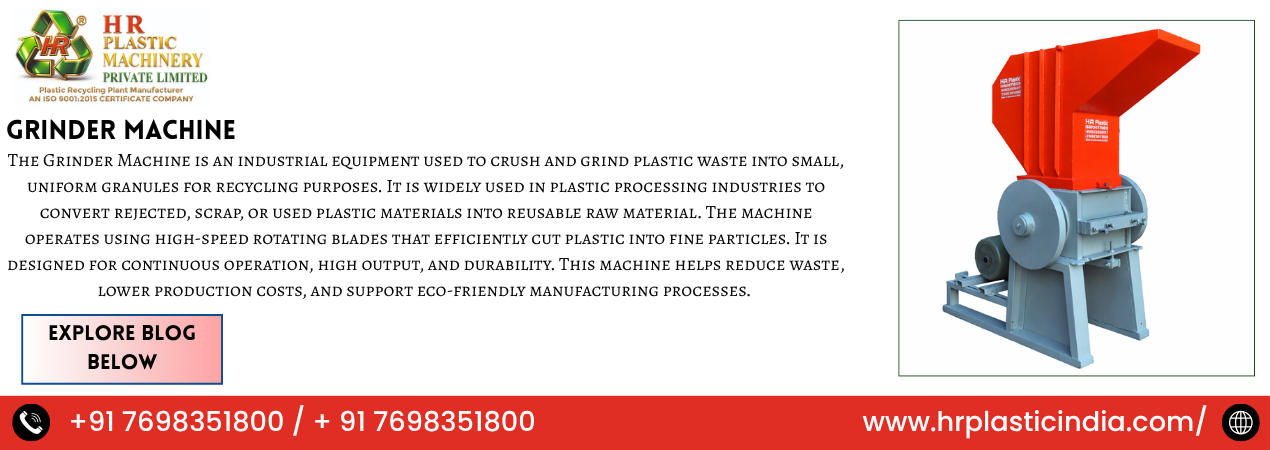
Grinder Machine in Gujarat is an important requirement for plastic recycling units, plastic processing companies, scrap handling facilities, and manufacturers that want to reuse plastic waste in a productive and organized way. As industries focus more on material recovery, waste reduction, and efficient production, grinder machines have become a practical part of modern plastic processing operations.
About the Company
H.R. Plastic Industries Private Limited
H.R. Plastic Industries Private Limited is engaged in plastic processing machinery and recycling equipment solutions. The company works with machines used in plastic recycling, dana making, grinding, agglomeration, mixing, washing, extrusion, and related industrial processes. Its product range supports plastic waste handling and reuse across different manufacturing and recycling applications.
Plastic Recycling
Understanding the Role of Grinder Machine in Plastic Recycling
A grinder machine plays an important role in the first stage of plastic recycling. Before plastic waste can be reused or processed further, it often needs to be reduced into smaller and more manageable pieces. Large plastic waste such as containers, drums, chairs, lumps, solid PP waste, and regrind material cannot be processed efficiently in its original form. A grinder machine helps convert these materials into smaller particles suitable for further handling.
The machine works through high-speed rotating cutting blades. These blades cut and grind plastic waste inside a specially designed chamber. The result is a more uniform output that can be used in recycling plants, granule production, injection molding units, extrusion lines, and other plastic processing systems.
For businesses in Gujarat, this process supports better material utilization. Instead of discarding rejected or leftover plastic, industries can recover usable material and reduce dependency on fresh raw material where reuse is technically suitable.
Gujarat Industries
Why Gujarat Industries Need Plastic Grinder Machines
Gujarat is one of India's active industrial regions, especially for plastic manufacturing, packaging, engineering, chemicals, automotive components, agriculture products, and recycling-based businesses. Cities and industrial areas across Gujarat generate plastic scrap regularly during production, packaging, molding, cutting, trimming, and finishing operations.
A plastic grinder machine helps companies manage this scrap in a more organized way. It supports both in-house waste management and commercial recycling operations. For manufacturers, it helps reduce storage issues caused by bulky plastic waste. For recycling units, it improves material preparation before further processing.
The demand for grinder machines in Gujarat is also connected with increasing awareness of sustainable manufacturing. Industries are focusing on cleaner production practices, controlled waste handling, and practical recycling methods. A grinder machine supports these goals by making plastic waste easier to reuse and process.
Machine Operation
How a Grinder Machine Works
A grinder machine is designed to cut plastic waste into smaller particles using sharp rotating blades and a strong cutting chamber. The material is fed into the hopper, where it moves toward the cutting system. As the blades rotate at high speed, the plastic is crushed and reduced into smaller granules.
The grinding process depends on the type of plastic, material thickness, blade sharpness, motor power, chamber design, and screen size. Hard plastic waste may require stronger cutting force, while thinner plastic items may need controlled feeding and consistent blade action. The main goal is to achieve uniform output without unnecessary material damage or operational difficulty.
A well-designed grinder machine helps maintain stable performance during continuous industrial operation. It also supports better productivity by reducing downtime and improving material flow.
Machine Features
Key Features of Industrial Grinder Machine
A grinder machine used for plastic recycling should be built for strength, consistency, and ease of operation. Since plastic waste can vary in size, hardness, and shape, the machine must be capable of handling different materials under industrial working conditions.
Important features generally include:
- High-speed rotating cutting blades for efficient plastic grinding
- Heavy-duty body structure for long working life
- Powerful motor support for continuous operation
- Precision cutting system for uniform granule size
- Easy feeding hopper for quick material input
- Low vibration design for smoother performance
- Energy-efficient operation for controlled power use
- User-friendly controls for practical machine handling
- Simple maintenance access for routine cleaning and blade care
- Strong chamber design for handling hard plastic waste
These features are important because plastic recycling machines are often used for long working hours. A weak structure or poor cutting system can affect output quality, maintenance frequency, and operational efficiency.
Material Types
Types of Plastic Waste Processed by Grinder Machine
Plastic grinder machines are useful for different types of plastic scrap and waste materials. Their application depends on machine capacity, blade design, motor power, and material condition. In plastic recycling industries, grinder machines are commonly used for both hard and semi-hard plastic materials.
Common materials include:
- PP solid waste
- HDPE plastic waste
- PET bottle waste
- PVC plastic material
- Container waste
- Drum waste
- Chair waste
- Lumps waste
- Regrind waste
- Industrial plastic scrap
This makes the grinder machine suitable for recycling plants, plastic product manufacturers, injection molding units, blow molding units, and packaging-related industries. Proper material selection and machine matching are important for achieving consistent grinding performance.
Applications
Applications of Grinder Machine in Gujarat
A grinder machine is used across several industrial applications where plastic waste needs to be processed for reuse or recycling. In Gujarat, many industries generate plastic scrap as part of their regular production activity, making grinder machines useful for both small and large-scale operations.
Common applications include:
- Plastic recycling plants for waste processing
- Injection molding industries for reusing scrap material
- Blow molding units for bottle and container recycling
- Packaging industries for plastic waste reuse
- Plastic product manufacturing units
- Industrial scrap processing facilities
- Waste management and recycling industries
- Granule production for reuse in plastic processing
These applications show why grinder machines are not limited to one type of business. They are useful wherever plastic waste needs to be reduced, handled, and reused more efficiently.
Recycling Plants
Grinder Machine for Plastic Recycling Plants
Plastic recycling plants depend heavily on proper material preparation. Before plastic waste can be washed, dried, extruded, or converted into granules, it often needs to be crushed into suitable sizes. A grinder machine helps recycling plants maintain smoother material flow throughout the process.
When the input material is properly ground, downstream machines can work more efficiently. Uniform particle size can support better washing, drying, melting, and reprocessing results. This improves overall recycling consistency and reduces unnecessary operational challenges.
For recycling businesses in Gujarat, selecting the right grinder machine can directly affect daily output, material handling efficiency, and long-term working stability.
Molding Industries
Grinder Machine for Injection and Blow Molding Units
Injection molding and blow molding units often generate plastic scrap during production. This may include rejected parts, runner waste, trimming waste, defective components, bottles, caps, containers, and other plastic items. Instead of storing or discarding this material, companies can grind it into reusable form.
A grinder machine allows manufacturers to manage production scrap more efficiently. The ground material can be evaluated and reused depending on product quality standards and material compatibility. This helps reduce waste and supports better resource utilization.
In Gujarat's manufacturing environment, where plastic products are produced in large volumes, grinder machines are useful for maintaining cleaner and more organized production processes.
Buyer Guide
Important Buyer Checklist for Grinder Machine
Choosing the right grinder machine requires a practical understanding of material type, production need, and long-term operating conditions. Buyers should not select a machine only by size or basic specifications. The machine should match the actual type of plastic waste and expected output requirement.
Before choosing a grinder machine, buyers should check:
- Type of plastic waste to be processed
- Required output size and granule consistency
- Machine body strength and plate thickness
- Motor power and energy consumption
- Blade material, sharpness, and replacement ease
- Feeding hopper design and operator safety
- Maintenance accessibility
- Noise and vibration control
- Continuous operation capability
- Suitability for future production expansion
This checklist helps buyers make a more informed decision and avoid machine mismatch. A properly selected grinder machine can provide better reliability and smoother operation over time.
Specifications
Technical Specification Overview
The grinder machine range includes models designed for different processing needs. Model selection usually depends on production capacity, waste type, and industrial usage requirement. The available specifications include HRPIG-15, HRPIG-18, HRPIG-24, and HRPIG-36 models with 40 MM plate body construction.
HRPIG-15
HRPIG-18
HRPIG-24
HRPIG-36
The 40 MM plate body supports heavy-duty use and helps maintain structural strength during grinding operations. This is important because plastic waste grinding can create pressure, vibration, and cutting load inside the chamber. A strong body structure helps improve machine durability and stable performance.
Buyers should review the correct model based on their waste volume, material hardness, and daily operating hours before final selection.
Operational Care
Maintenance and Operational Care
A grinder machine works under continuous cutting and crushing conditions, so regular maintenance is necessary for stable performance. Proper blade inspection, chamber cleaning, bearing checks, and motor care help improve machine life and reduce unexpected downtime.
Operators should avoid overfeeding the machine beyond its recommended capacity. Mixed materials should also be checked before feeding, especially if metal pieces, stones, or unwanted hard objects are present in the plastic scrap. Such contaminants can damage blades and affect output quality.
Routine maintenance supports smoother operation, better grinding quality, and safer machine handling. For industrial users in Gujarat, maintenance planning is important because grinder machines are often used as part of daily production or recycling activity.
Sustainability
Grinder Machine and Sustainable Plastic Processing
Plastic waste management is an important concern for modern industries. A grinder machine supports sustainable plastic processing by helping convert waste into reusable material. This does not remove the need for proper sorting, cleaning, and responsible recycling practices, but it creates an important first step in material recovery.
By reducing plastic waste into smaller granules, industries can improve storage, handling, transportation, and reprocessing efficiency. This supports better waste control and helps companies move toward more responsible manufacturing practices.
For plastic recycling units and processing businesses in Gujarat, grinder machines are practical equipment for improving material reuse and reducing avoidable waste.
Machine Selection
Why Reliable Machine Selection Matters
A grinder machine is not only a basic crushing unit. It affects the quality of recycled material, the efficiency of the recycling process, and the overall productivity of the operation. Poor grinding can create uneven material size, increase power use, reduce blade life, and slow down downstream processes.
Reliable machine selection helps maintain consistent performance. Buyers should focus on machine construction, cutting technology, motor capacity, service support, and suitability for specific plastic waste. A good grinder machine should support long-term industrial use and simple operation.
For businesses looking for a grinder machine in Gujarat, understanding these factors helps them make a practical and informed purchase decision.
Conclusion
Grinder Machine in Gujarat
Grinder Machine in Gujarat is a practical solution for plastic recycling plants, plastic product manufacturers, injection molding units, blow molding units, packaging industries, and scrap processing businesses. It helps convert plastic waste into smaller granules that can be handled, reused, and processed more efficiently.
As Gujarat continues to remain active in plastic processing and industrial manufacturing, the need for reliable grinder machines is increasing. A properly selected machine supports better waste management, consistent grinding output, smoother recycling operations, and improved material utilization.
For businesses working with plastic scrap, hard plastic waste, containers, drums, chairs, lumps, PP waste, HDPE waste, PET waste, and other recyclable materials, a grinder machine plays an important role in building an efficient plastic recycling process.
FAQs
Frequently Asked Questions
What is a grinder machine used for in plastic
recycling?
A grinder machine is used to crush and grind plastic waste
into small and uniform granules. These granules can be reused or processed further in plastic recycling,
injection molding, extrusion, and plastic manufacturing applications. It helps reduce bulky plastic waste and
makes material handling easier.
Which plastic materials can be processed in a grinder
machine?
A grinder machine can process different plastic materials
such as PP, HDPE, PET, PVC, container waste, drum waste, chair waste, lumps waste, and industrial plastic
scrap. The suitability depends on machine capacity, blade design, motor power, and the hardness of the
material.
Why is grinder machine demand growing in Gujarat?
The demand for grinder machines in Gujarat is growing
because the state has strong plastic processing, packaging, molding, recycling, and industrial manufacturing
activity. These industries generate regular plastic waste that needs to be processed efficiently for reuse and
recycling.
How does a plastic grinder machine improve production
efficiency?
A plastic grinder machine improves efficiency by
converting waste material into smaller reusable granules. This reduces storage space, supports smoother
recycling, improves material handling, and helps industries manage production scrap more effectively.
What should buyers check before selecting a grinder
machine?
Buyers should check the type of plastic waste, required
output size, motor power, blade quality, body strength, feeding design, maintenance access, and continuous
operation capacity. The machine should match actual production needs rather than only basic size requirements.
Can grinder machines be used in injection molding
industries?
Yes, grinder machines are commonly used in injection
molding industries to grind runner waste, rejected parts, trimming waste, and other plastic scrap. The
processed material can be reused depending on quality requirements and material compatibility.
Is maintenance important for grinder machine
performance?
Yes, regular maintenance is important for stable grinder
machine performance. Blade inspection, chamber cleaning, motor checking, and proper feeding practices help
reduce downtime, improve output consistency, and extend machine life.
Contact Us
Get in Touch
Address
Office: 3, Abhishree Industrial Park, B/h. G.V.M.M., Near Odhav Circle, Ahmedabad‑382415
Company: 35, Shivalik Industrial Park, Nr. Amba Hotel, Chowkadi, Near Kuha Gam, Ahmedabad to Indor Highway, Ahmedabad‑382433
Company: 35, Shivalik Industrial Park, Nr. Amba Hotel, Chowkadi, Near Kuha Gam, Ahmedabad to Indor Highway, Ahmedabad‑382433
Email
[email protected]
Phone
+91 7698351800
Recent Posts