H.R. PLASTIC MACHINERY PVT. LTD.
Hydraulic Baling Press Machine in Ahmedabad
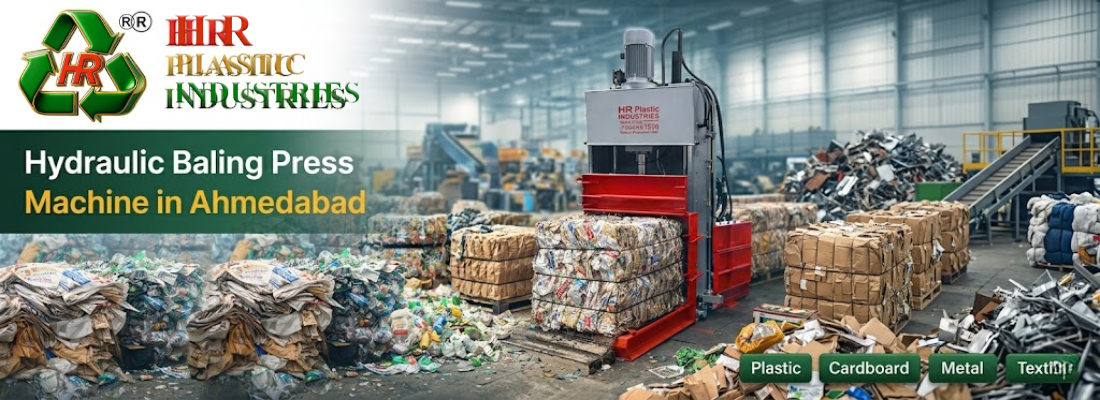
Hydraulic Baling Press Machine in Ahmedabad
Hydraulic Baling Press Machine in Ahmedabad | HR Plastic Industries
Hydraulic Baling Press Machine in Ahmedabad
Industrial waste management has become a critical aspect of modern manufacturing and recycling operations. In Ahmedabad, where industries such as plastic processing, packaging, and metal fabrication are highly active, efficient handling of waste materials directly impacts operational productivity and environmental compliance. A hydraulic baling press machine plays a vital role in converting loose, bulky waste into compact, manageable bales, making storage, transportation, and recycling more efficient.
The increasing focus on sustainability and optimized resource utilization has further accelerated the adoption of advanced baling solutions across industrial units. Businesses are now seeking systems that not only reduce waste volume but also support smoother workflows and better resource management.
Understanding Hydraulic Baling Press Machine Technology
A hydraulic baling press machine operates using a high-pressure hydraulic system that compresses different types of waste materials into dense bales. Hydraulic cylinders apply controlled force to ensure uniform compression and consistent output. This technology is widely used for handling materials such as plastic scrap, paper, cardboard, textile waste, and metal residues.
The machine is designed for reliable performance, even under continuous industrial usage. Its stable compression process minimizes operational disruptions while maintaining consistent bale quality. With a robust structural framework and efficient hydraulic components, it supports long-term use with minimal maintenance.
Role of Hydraulic Baling Machines in Ahmedabad's Industrial Ecosystem
Ahmedabad has a diverse industrial base, including plastic recycling units, textile manufacturing, packaging industries, and logistics hubs. These sectors generate large volumes of waste that require systematic management. A hydraulic baling press machine in Ahmedabad helps industries address these challenges by reducing waste volume and improving handling efficiency.
The use of such machines supports better workspace organization, reduces storage congestion, and streamlines logistics operations. In recycling industries, compact bales are easier to transport and process, contributing to improved recycling efficiency and more effective resource recovery.
Key Features of Hydraulic Baling Press Machine
- Heavy-duty hydraulic system designed for high compression force
- Strong mild steel body construction for durability and long service life
- Uniform bale formation for consistent density and shape
- User-friendly operation with manual or automatic control options
- Energy-efficient performance with optimized power consumption
- Integrated safety mechanisms for operator protection
- Suitable for continuous industrial usage without performance loss
- Compact structure for easy installation in limited spaces
Applications Across Industries
- Plastic recycling units handling post-consumer and industrial plastic waste
- Paper and cardboard processing facilities for packaging waste
- Metal scrap yards and fabrication industries
- Textile manufacturing units managing fabric waste
- Warehouses and logistics centers handling packaging materials
- Municipal waste management systems
- Industrial production units generating bulk scrap
Benefits of Using Hydraulic Baling Press Machine
- Significant reduction in waste volume, optimizing storage space
- Improved handling efficiency with compact, uniform bales
- Reduced transportation costs due to lower material volume
- Better workplace organization and cleanliness
- Enhanced recycling process efficiency
- Reduced dependency on manual handling
How Hydraulic Baling Press Machine Improves Operational Efficiency
Integrating a hydraulic baling press machine into industrial workflows leads to measurable efficiency improvements. By compressing waste materials at the source, industries can reduce the frequency of waste disposal and transportation, helping lower operational costs and improve resource utilization.
The machine also minimizes material loss during handling. Compacted bales remain stable, reducing the chances of scattering, contamination, or damage during transport. This is especially important for recyclable materials where maintaining quality is essential.
Another advantage is reduced manual intervention. Semi-automatic or automatic operations decrease reliance on manual handling, improving worker safety and productivity. Built-in safety systems and controlled operation further enhance workplace safety standards.
Choosing the Right Hydraulic Baling Press Machine
Selecting the right baling press machine depends on specific operational requirements. Industries should assess their waste generation volume, material type, and available space before making a decision.
- Identify the type of waste material such as plastic, paper, or metal
- Evaluate daily or monthly waste volume
- Choose between standard or heavy-duty models based on load capacity
- Consider the level of automation required
- Assess available installation space and power requirements
- Ensure compatibility with existing recycling or disposal systems
Proper evaluation ensures the selected machine aligns with operational needs and delivers consistent performance over time.
Industrial Demand for Baling Machines in Gujarat
Gujarat has emerged as a major industrial hub with a strong presence in manufacturing and recycling sectors. The demand for efficient waste management solutions continues to grow due to increasing production volumes and evolving environmental regulations.
Hydraulic baling press machines have become an essential part of this ecosystem, enabling industries to manage waste responsibly while maintaining operational efficiency. Their ability to handle a wide range of materials makes them a versatile solution across industries.
Integration with Recycling and Sustainability Practices
The role of hydraulic baling machines extends beyond operational efficiency. They contribute significantly to sustainable industrial practices. By enabling effective waste segregation and compression, these machines support recycling initiatives and help reduce environmental impact.
Compact bales are easier to transport to recycling facilities, allowing faster processing and improved recovery of reusable materials. This supports a circular approach where waste is converted into valuable resources.
Maintenance and Long-Term Performance
A well-designed hydraulic baling press machine requires minimal maintenance when operated correctly. Regular inspection of hydraulic components, proper lubrication of moving parts, and adherence to operational guidelines ensure long-term reliability.
The machine's robust construction allows it to handle heavy-duty usage, making it suitable for continuous industrial operations. Consistent maintenance helps maintain performance stability and extends equipment lifespan.
Future of Waste Management Equipment in Ahmedabad
With increasing industrial growth and stricter environmental standards, the need for efficient waste management systems will continue to rise. Hydraulic baling press machines will remain a key solution for industries adapting to these changes.
Advancements in automation and energy efficiency are expected to further enhance machine performance, making them more adaptable to evolving industrial requirements. Businesses that invest in efficient waste management systems are better positioned to improve productivity and meet compliance standards.
Conclusion
A hydraulic baling press machine in Ahmedabad is an essential solution for industries aiming to manage waste efficiently while improving operational performance. Its ability to compress bulky materials into compact bales simplifies storage, handling, and transportation.
By integrating this technology into industrial processes, businesses can achieve better organization, reduce operational costs, and support sustainable practices. As industries continue to expand, adopting efficient waste management solutions will remain a key factor in maintaining productivity and environmental responsibility.
FAQs
What materials
can be processed using a hydraulic baling press machine?
A hydraulic baling press machine can process a wide
range of materials, including plastic waste, paper, cardboard, textile scraps, and metal residues. This
versatility makes it suitable for multiple industrial applications.
How does a
hydraulic baling press machine improve storage efficiency?
The machine compresses loose waste into compact bales,
significantly reducing volume. This allows industries to utilize storage space more effectively and maintain
organized work areas.
Is the machine
suitable for continuous industrial operations?
Yes, hydraulic baling press machines are designed for
continuous usage. Their robust construction and reliable hydraulic systems ensure consistent performance under
heavy workloads.
What safety
features are included in hydraulic baling machines?
Most machines include safety locking systems,
controlled operation mechanisms, and protective structures to ensure operator safety during the compression
process.
How does this
machine support recycling processes?
By compressing waste into uniform bales, the machine
simplifies transportation and handling, making it easier for recycling facilities to process materials
efficiently.
Does the
machine require high maintenance?
Hydraulic baling press machines are designed for low
maintenance. Regular inspection and basic upkeep are sufficient to ensure long-term performance and
reliability.
Recent Posts