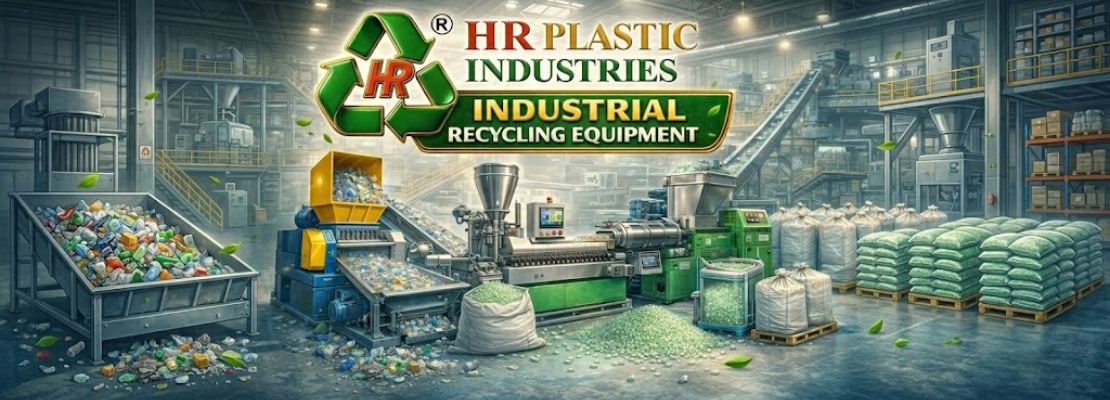
Industrial Recycling Equipment
Industrial Recycling Equipment
Industrial recycling equipment plays a vital role in managing plastic waste and converting it into reusable materials for manufacturing.
Industrial recycling equipment plays a vital role in managing plastic waste and converting it into reusable materials for manufacturing. As industries generate significant volumes of plastic scrap during production and post-consumer processes, efficient recycling systems are essential for maintaining operational sustainability and reducing environmental impact. These machines are designed to process various types of plastic materials and transform them into usable forms such as granules, flakes, or pellets.
The demand for advanced recycling solutions continues to grow due to stricter environmental regulations and the increasing focus on resource efficiency. Industrial recycling equipment enables manufacturers to minimize waste, reduce dependence on virgin raw materials, and improve overall production efficiency by reintroducing recycled plastic into the manufacturing cycle.
Understanding the Function of Industrial Recycling Equipment
Industrial recycling equipment operates through a structured sequence of processes that convert plastic waste into reusable raw material. These systems typically integrate multiple machines, each responsible for a specific stage of recycling. From size reduction to final pellet formation, every stage is engineered to ensure consistency, quality, and efficiency.
The process begins with sorting and segregation, where different plastic materials are separated based on their properties. This is followed by shredding or crushing, which reduces the size of plastic waste into manageable pieces. The material is then cleaned to remove contaminants such as dust, labels, and residues.
After cleaning, the material undergoes drying and is fed into an extrusion system. During extrusion, the plastic is melted and filtered to remove impurities. The molten material is then converted into granules or pellets, making it suitable for reuse in various manufacturing applications.
Key Components in Industrial Recycling Systems
Industrial recycling equipment consists of multiple interconnected components that work together to ensure efficient processing. Each component plays a critical role in maintaining product quality and smooth operation.
The system includes shredders or crushers for initial size reduction, followed by washing units that clean the material thoroughly. Drying systems remove moisture before the material enters the extrusion stage. The extrusion unit, along with screw and barrel mechanisms, melts and homogenizes the plastic. Screen changers help filter impurities, while pelletizing units convert the processed material into uniform granules.
Control panels and automation systems are integrated to monitor temperature, pressure, and other operational parameters. This ensures consistent performance while reducing manual intervention.
Step-by-Step Recycling Process
- 1Collection and sorting of plastic waste
- 2Shredding or crushing into smaller pieces
- 3Washing to remove contaminants
- 4Drying to eliminate moisture
- 5Extrusion and melting of plastic material
- 6Filtration of impurities
- 7Pelletizing into reusable granules
This structured process ensures that the final output meets quality standards required for industrial reuse.
Applications of Industrial Recycling Equipment
Industrial recycling equipment is widely used across industries where plastic materials are extensively utilized. It helps manage waste efficiently while supporting continuous production processes.
- Plastic manufacturing units for reprocessing scrap
- Packaging industries handling films and flexible plastics
- Textile and non-woven fabric industries
- Automotive component manufacturing
- Construction and infrastructure material processing
- Consumer goods and injection molding industries
These applications demonstrate the versatility of recycling equipment in handling different types of plastic waste.
Benefits of Using Industrial Recycling Equipment
By integrating recycling systems, industries can achieve more sustainable production while maintaining material efficiency.
Factors to Consider When Selecting Recycling Equipment
Selecting the right industrial recycling equipment requires careful evaluation of operational requirements and material characteristics. Different types of plastic waste demand specific processing configurations to achieve optimal performance.
Important factors include material type, required output capacity, energy consumption, level of automation, and maintenance needs. Equipment compatibility with existing production systems is also essential for seamless integration. Additionally, the quality of components such as screw barrels, gearboxes, and control systems significantly influences long-term performance and reliability.
A well-designed recycling system ensures consistent output while minimizing downtime and operational challenges.
Role in Sustainable Manufacturing
Industrial recycling equipment plays a key role in supporting sustainable manufacturing by enabling the circular use of materials. Instead of disposing of plastic waste, industries can convert it into reusable raw material, reducing landfill accumulation and environmental impact.
The adoption of recycling systems also aligns with global sustainability goals by lowering carbon emissions and conserving natural resources. By transforming waste into valuable input material, industries can maintain efficient and environmentally responsible operations.
Maintenance and Operational Efficiency
Regular maintenance is essential for ensuring the smooth functioning of industrial recycling equipment. Routine cleaning, timely replacement of worn components, and continuous monitoring of operational parameters help maintain efficiency and extend equipment lifespan.
Automation systems contribute significantly to operational efficiency by enabling real-time monitoring and control. This reduces the likelihood of human error and ensures consistent processing conditions, resulting in improved output quality.
Proper training of operators is equally important to ensure safe handling, optimal performance, and minimal operational risks.
Future Trends in Industrial Recycling Equipment
The recycling industry continues to evolve with advancements in technology. Modern industrial recycling equipment is becoming more energy-efficient, highly automated, and capable of processing complex plastic waste streams.
Innovations such as smart control systems, advanced filtration techniques, and improved extrusion technologies are enhancing both efficiency and output quality. The integration of digital monitoring tools allows industries to track performance and optimize operations in real time.
As sustainability becomes a central focus, industrial recycling equipment will continue to play a crucial role in advancing responsible manufacturing and effective waste management practices.
Frequently Asked Questions
Filter Using Tags
