H.R. PLASTIC MACHINERY PVT. LTD.
Monolayer Blown Film Machine in Ahmedabad
Monolayer Blown Film Machine in Ahmedabad
Monolayer Blown Film Machine in Ahmedabad | HR Plastic Industries
HR Plastic Industries · Ahmedabad
Monolayer Blown Film Machine in Ahmedabad
The demand for Monolayer Blown Film Machine in Ahmedabad has grown steadily as plastic packaging, industrial film manufacturing, and polymer processing sectors continue to expand across Gujarat.
Overview
Monolayer Blown Film Machine in Ahmedabad
From packaging manufacturers to agricultural film producers and industrial converters, businesses increasingly require extrusion systems capable of delivering uniform, durable plastic films with reliable process consistency.
A monolayer blown film machine is widely used for producing single-layer plastic films from materials such as LDPE, HDPE, and LLDPE. These films serve applications including packaging, carry bags, liners, lamination, shrink films, and industrial wrapping. The technology supports continuous production while helping manufacturers maintain thickness control, output stability, and efficient raw material utilization.
Ahmedabad has emerged as an important center for plastic processing machinery and extrusion technology. With a strong industrial base, a well-developed polymer ecosystem, and growing packaging demand, the city continues to see increasing adoption of advanced blown film systems designed for productivity, energy efficiency, and long service life.
Technology
Understanding Monolayer Blown Film Machine Technology
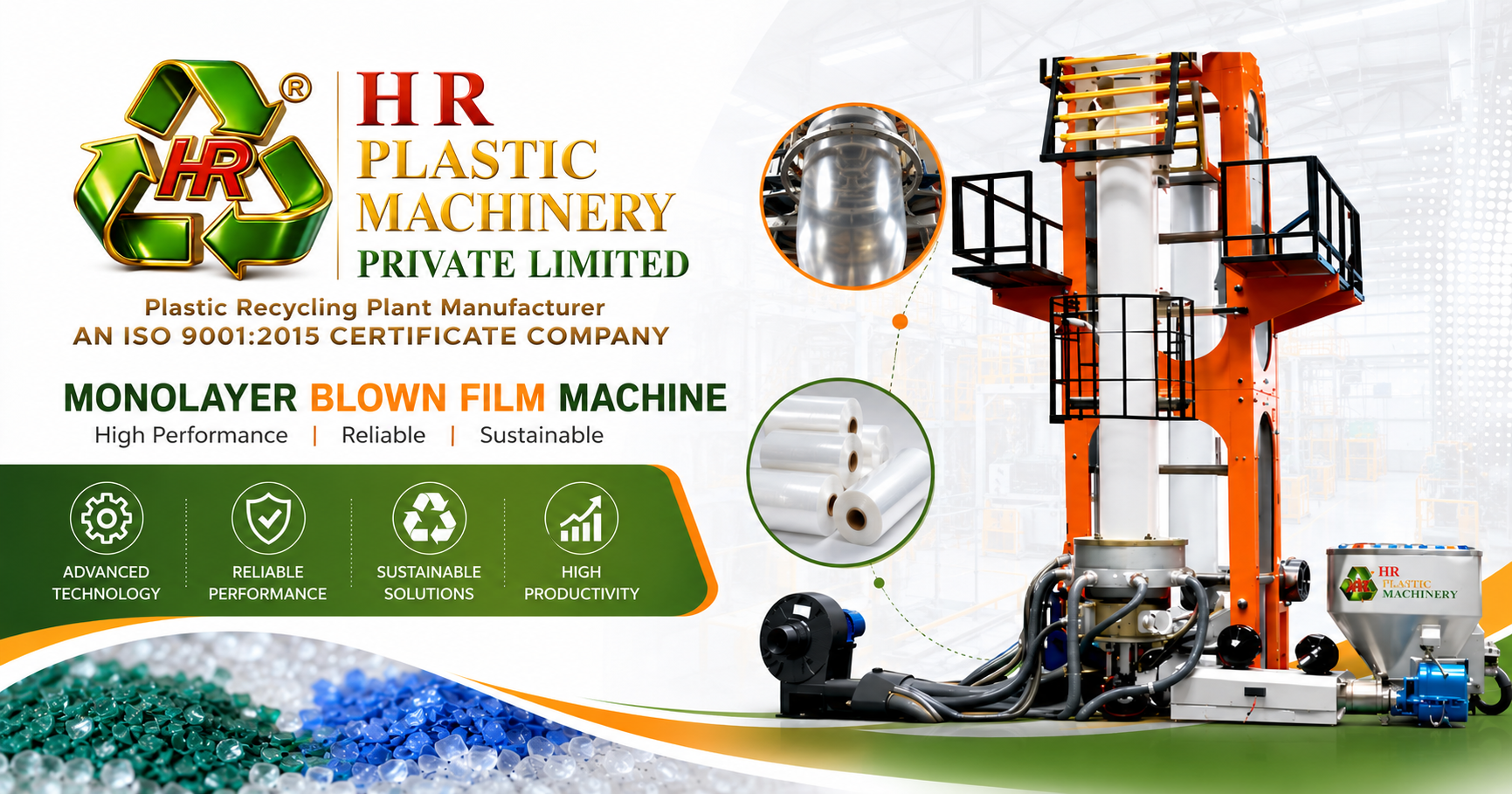
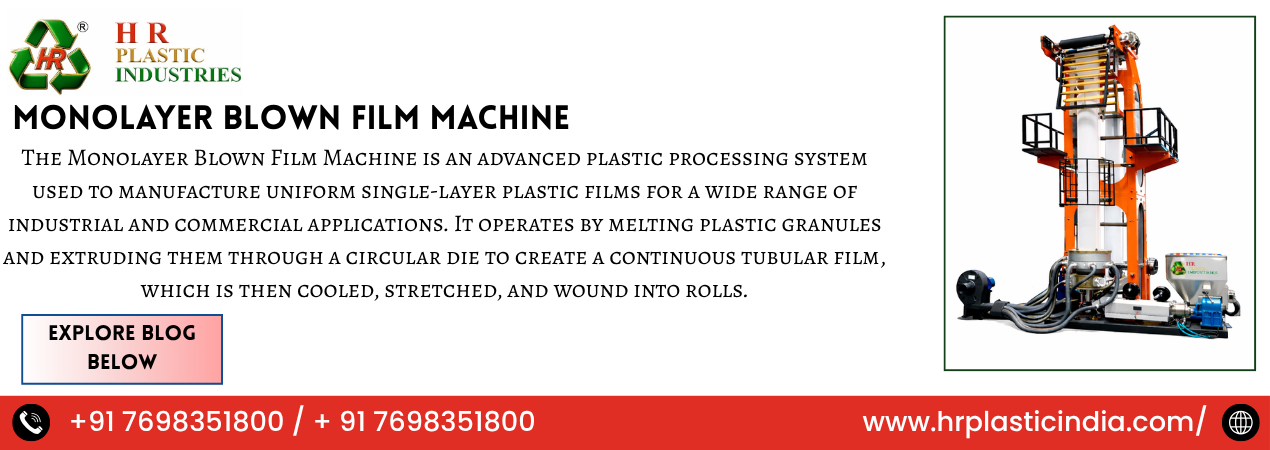
A monolayer blown film machine operates through an extrusion process in which plastic granules are melted inside an extruder barrel and pushed through a circular die. The molten polymer forms a tube, commonly known as a bubble, which is cooled and expanded using air before being collapsed and wound into rolls.
This process enables the production of flexible films with controlled thickness, good tensile strength, and consistent surface finish. Depending on the application, the machine can produce films suitable for lightweight packaging as well as more demanding industrial use.
Modern systems are designed with precision-engineered components such as:
- Extruder screw and barrel for uniform melting
- Efficient air ring cooling for bubble stability
- Bubble stabilizers for dimensional consistency
- Automatic winding systems for accurate roll formation
- Intelligent controls for process monitoring
These components support reliable production performance while minimizing process variation during long operating cycles.
Industrial Importance
Industrial Importance of Blown Film Machines
Flexible plastic films are used across multiple sectors, making blown film machinery an essential part of industrial manufacturing. Demand often comes from businesses seeking production systems that combine output efficiency with dependable material performance.
Common industrial uses include:
- Plastic carry bag manufacturing
- Packaging film production
- Agricultural mulch films
- Stretch and shrink films
- Food-grade packaging films
- Industrial liner rolls
- Lamination film applications
- Garbage bag and liner production
Because a single machine can support diverse film applications, manufacturers often prefer systems that offer process flexibility along with durable construction.
Market Insight
Why Ahmedabad Has Strong Demand for These Systems
Ahmedabad has long been associated with engineering and plastic processing industries. Its industrial infrastructure, raw material accessibility, and machinery manufacturing ecosystem make it a strong market for extrusion and blown film equipment.
Growing packaging consumption across food processing, agriculture, pharmaceuticals, chemicals, and retail has contributed to rising demand for film production machinery.
Many processors also seek machines that help balance production output with power efficiency and reduced manpower requirements. This has increased interest in systems designed not only for production capacity, but also for operational optimization.
Functional Features
Key Functional Features of Monolayer Blown Film Machines
Modern monolayer film extrusion systems are valued not only for output but also for production stability. Important functional characteristics often include:
- Stable and continuous extrusion performance
- Uniform film thickness control
- Energy-efficient heating systems
- Advanced cooling arrangements
- Durable machine structure
- Easy operation and low maintenance
- Multi-material processing compatibility
- Consistent roll winding quality
These features contribute to reduced production interruptions and better control over finished film quality.
Selection Guide
Production Models and Output Considerations
Selection of a monolayer blown film machine often depends on production targets, material type, and intended application. Different output capacities are suited to different scales of manufacturing.
Processors may evaluate equipment based on:
- Kilogram-per-hour output requirements
- Film width and thickness range
- Polymer compatibility
- Energy consumption levels
- Cooling efficiency
- Automation requirements
- Winder configuration
- Long-term maintenance considerations
A properly selected system supports not only current production needs but also future scalability.
Applications
Applications Across Packaging and Manufacturing Sectors
Monolayer films remain widely used because of their versatility and practical performance. Their applications extend far beyond conventional packaging products.
Industries commonly using films produced through these systems include:
- Flexible packaging industries
- Agricultural input manufacturers
- Industrial packaging suppliers
- Food processing units
- Lamination and converting industries
- Plastic bag manufacturing operations
- Retail packaging product producers
- Waste management product manufacturers
This broad application range continues to support ongoing demand for efficient blown film machinery.
Operational Benefits
Operational Benefits for Manufacturers
Many businesses consider blown film machinery not only as production equipment but as a process-efficiency investment. Operational advantages often influence equipment decisions as much as technical specifications.
Frequently considered benefits include:
- Reduced material handling losses
- Lower manpower dependency
- Better process continuity
- Improved output-to-investment ratio
- Stable product quality consistency
- Lower operational disruptions
- Efficient raw material utilization
- Support for high-volume production
These advantages can influence productivity, waste reduction, and long-term operating efficiency.
Buying Considerations
Factors to Consider Before Choosing a Monolayer Blown Film Machine
Selecting the right system requires evaluating technical and operational requirements rather than focusing only on output figures.
Important considerations include screw design, heating efficiency, die quality, cooling performance, automation features, and machine durability. Businesses should also review after-sales support, spare parts availability, and ease of maintenance.
Buyers may also assess whether the machine supports the specific polymer grades and film applications required for their production process.
Choosing equipment aligned with application requirements often has greater long-term impact than selecting based solely on production capacity.
Design & Quality
Role of Machine Design in Film Quality
Film performance often depends significantly on machine design quality. Bubble stability, die precision, cooling uniformity, and winding accuracy all influence final film characteristics.
Poorly controlled extrusion may lead to thickness variation, surface defects, or unstable production behavior. Well-engineered systems help reduce such issues while supporting repeatable output quality.
For manufacturers producing films for demanding packaging applications, process stability often becomes as important as machine speed.
Future Scope
Growing Future Scope of Blown Film Machinery
With increasing use of flexible packaging and evolving industrial packaging requirements, blown film technology continues to remain relevant. Demand is also influenced by efficiency-focused production practices and changing material usage trends.
As processors seek better productivity and process control, interest continues growing in machinery that combines durability, output optimization, and energy-conscious operation.
For industrial regions such as Ahmedabad, this trend continues supporting demand for advanced extrusion equipment across both established manufacturers and expanding production units.
Conclusion
Conclusion
Monolayer Blown Film Machine in Ahmedabad plays an important role in flexible packaging and industrial film production by supporting efficient extrusion, stable output, and versatile film manufacturing applications. From carry bag production to agricultural and industrial packaging films, these systems remain essential for a wide range of processing operations.
With growing packaging demand, strong industrial infrastructure, and continued focus on production efficiency, Ahmedabad remains a significant market for reliable monolayer blown film technology.
FAQ
Frequently Asked Questions
What is a monolayer blown film machine used for?
A monolayer blown film machine is used to manufacture single-layer plastic films for applications such as packaging, carry bags, agricultural films, liners, and industrial wrapping products through an extrusion process.
Which materials can be processed in a monolayer blown film machine?
These machines commonly process polymers such as LDPE, LLDPE, and HDPE, depending on machine design and intended film applications.
Why is thickness control important in blown film production?
Thickness control affects film strength, consistency, material usage, and product quality. Uniform thickness also supports better performance in packaging applications.
What industries use films produced by these machines?
Industries including packaging, agriculture, food processing, lamination, industrial packaging, and waste management commonly use films produced through blown film extrusion systems.
How is output capacity selected for a blown film machine?
Output capacity is usually selected based on production requirements, film specifications, material type, and planned manufacturing scale.
What factors should be checked before buying a blown film machine?
Buyers typically review output range, cooling efficiency, screw design, automation features, energy use, maintenance requirements, and application compatibility before selecting a machine.
Recent Posts