H.R. PLASTIC MACHINERY PVT. LTD.
Screw Barrel in Ahmedabad
Screw Barrel in Ahmedabad
Screw Barrel in Ahmedabad | H.R. Plastic Industries Private Limited
Ahmedabad | Plastic Processing Machinery
Screw Barrel in Ahmedabad
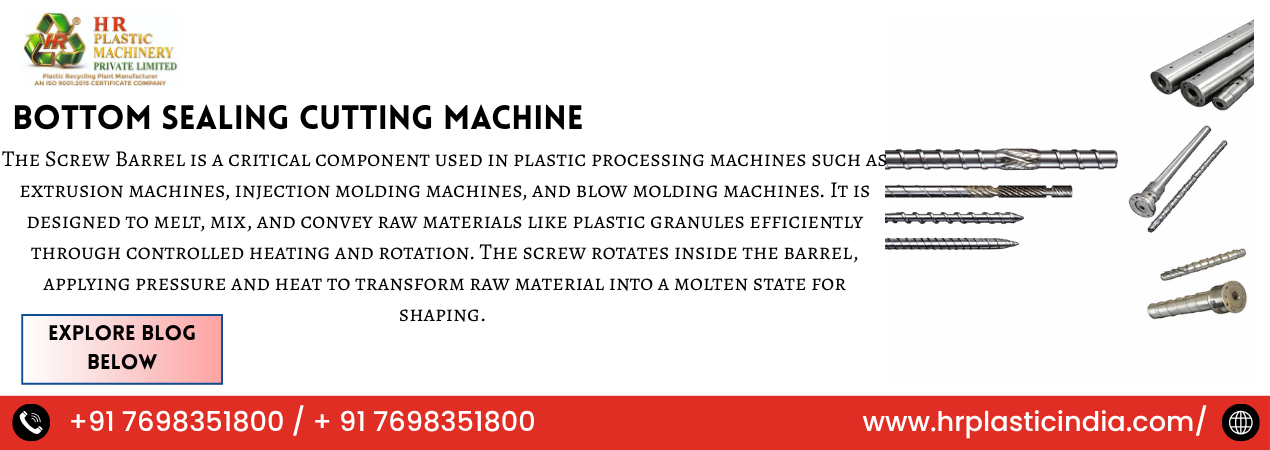
A screw barrel is one of the most important working components in plastic processing machinery. It directly affects melting quality, material mixing, output stability, machine efficiency, and the final quality of plastic products. For industries using extrusion machines, injection molding machines, blow molding machines, dana making machines, recycling plants, film lines, pipe extrusion lines, and plastic granule production systems, the screw barrel works as the core processing unit.
H.R. Plastic Industries Private Limited
H.R. Plastic Industries Private Limited is based in Ahmedabad and works in the field of plastic processing machinery and related industrial solutions. The company offers machinery and components used in plastic recycling, plastic dana making, extrusion, grinding, mixing, washing, agglomeration, and plastic processing applications. Its product range includes die face cutter automatic dana making machines, recycling plants, grinder machines, mixture machines, agglomeration machines, hydraulic screen changers, dust removers, plastic dana machines, washing plants, screw barrels, and other machinery used in plastic manufacturing and recycling units.
For businesses looking for a screw barrel in Ahmedabad, it is important to understand its construction, working method, material compatibility, application areas, and selection factors. A screw barrel is not just a spare part; it is a performance-critical component that controls how plastic raw material is heated, compressed, melted, conveyed, and processed inside the machine.
What Is a Screw Barrel?
A screw barrel is a mechanical assembly used in plastic processing machines to convert solid plastic raw material into molten or semi-molten form. It generally consists of a rotating screw and a fixed barrel. Plastic granules or recycled plastic material enter through the feeding section, move forward through screw rotation, and pass through heating and compression zones before reaching the outlet for further processing.
The screw rotates inside the barrel and pushes the material forward. During this movement, the material is exposed to heat, friction, pressure, and controlled shearing action. These combined actions help the plastic melt properly and prepare it for shaping, molding, extrusion, pelletizing, or further processing.
In practical industrial use, the screw barrel must handle different types of plastic materials such as PP, HDPE, LDPE, PVC, ABS, engineering plastics, recycled plastic waste, and blended materials. Since each material has different melting behavior and flow characteristics, the screw design and barrel quality must match the processing requirement.
Importance of Screw Barrel in Plastic Processing Machinery
The performance of plastic processing machinery depends heavily on the condition and design of the screw barrel. If the screw barrel is not properly designed, worn out, or unsuitable for the material, the machine may face issues such as uneven melting, low output, excess power consumption, material degradation, black spots, poor mixing, inconsistent granule size, or frequent breakdowns.
A good-quality screw barrel helps maintain steady production by ensuring controlled material movement and uniform heating. It also supports better plasticization, smooth flow, and improved output consistency. In recycling plants and dana making machines, this becomes especially important because recycled plastic material may vary in size, moisture, contamination level, and density.
For manufacturers in Ahmedabad and nearby industrial areas, reliable screw barrel performance helps reduce production interruptions and improves machine utilization. Since Ahmedabad is a major industrial location for plastic recycling, extrusion, packaging, pipe manufacturing, and machinery production, the demand for durable screw barrel solutions remains strong.
How Screw Barrel Works
The working of a screw barrel is based on controlled feeding, compression, melting, mixing, and discharge of plastic material. Raw plastic material enters the barrel through the feed hopper. As the screw rotates, it carries the material forward inside the heated barrel. The screw flights push the material through different zones, where heat and pressure gradually convert it into a process-ready form.
The screw barrel generally works through three main functional zones:
- Feeding zone: This section receives plastic granules or recycled material and starts moving it forward inside the barrel.
- Compression zone: This section applies pressure and heat to melt and compact the material properly.
- Metering zone: This section controls the final flow and prepares the material for extrusion, molding, or pelletizing.
This process must remain stable to achieve consistent product quality. If any zone does not perform properly, the output can be affected. For example, poor feeding can reduce capacity, poor compression can affect melting, and poor metering can create variation in product finish or granule quality.
Technical Importance of Screw Design
Screw design plays a major role in the final processing result. Parameters such as screw diameter, length-to-diameter ratio, flight depth, compression ratio, pitch, root diameter, and mixing section design directly influence machine performance. A screw used for PVC processing may not be suitable for HDPE or PP processing because each plastic behaves differently under heat and pressure.
For plastic recycling applications, the screw may need to handle mixed or reprocessed material. In such cases, proper screw geometry helps improve melting stability, reduce material burning, and support better output quality. For extrusion applications, screw design must support continuous flow and uniform pressure. For injection molding applications, it must help with accurate melting, dosing, and shot preparation.
This is why selecting the correct plastic screw barrel is important before installation or replacement. A suitable screw barrel can improve output, reduce maintenance issues, and support long-term machine performance.
Common Sizes and Industrial Suitability
Screw barrels are available in different sizes based on machine capacity and application type. Common sizes include:
45 mm
55 mm
65 mm
75 mm
90 mm
100 mm
110 mm
120 mm
125 mm
130 mm
140 mm
The correct size depends on the machine model, output requirement, material type, screw speed, processing method, and end product.
Small screw barrel sizes are commonly used in compact machinery, small extrusion units, and limited-capacity processing systems. Medium sizes are suitable for regular extrusion, dana making, and recycling applications. Larger sizes are used in high-output plastic processing plants where continuous production and higher load capacity are required.
Choosing the correct size is not only about diameter. The overall design, material grade, surface treatment, heating arrangement, and compatibility with the machine are also important.
Key Features of a Quality Screw Barrel
A high-performance screw barrel should be designed for durability, stable material flow, and long service life. Important features include:
- High-strength alloy steel construction for industrial working conditions
- Good wear and corrosion resistance for long-term use
- Precision-engineered screw design for controlled melting and conveying
- Uniform heating support for consistent plasticization
- Strong load-bearing capacity for continuous operation
- Smooth material flow with reduced friction
- Suitable design for different plastic materials and processing methods
- Low maintenance requirement when used with proper operating practices
These features are especially useful for industries that run machines for long production hours. A weak or poorly finished screw barrel can wear faster and affect the machine's output quality.
Surface Treatment and Wear Resistance
Wear resistance is a major factor in screw barrel performance. During operation, plastic material, fillers, additives, pigments, recycled particles, and abrasive impurities pass through the barrel under heat and pressure. Over time, this creates friction and wear on the screw flights and barrel inner surface.
To improve service life, screw barrels are often treated with processes such as nitriding, hard chrome plating, or bimetallic coating. Nitriding increases surface hardness and improves wear resistance. Bimetallic coating is suitable for applications where abrasive or corrosive materials are processed regularly. These treatments help maintain dimensional accuracy and reduce premature wear.
For plastic recycling plants, surface hardness becomes more important because recycled plastic material can contain dust, hard particles, or mixed contaminants. A durable screw barrel helps reduce frequent replacement and supports smoother production.
Applications of Screw Barrel
Screw barrels are used across many plastic processing and manufacturing applications. Common application areas include:
- Plastic extrusion machines
- Injection molding machines
- Blow molding machines
- Plastic recycling plants
- Dana making machines
- PVC pipe and profile manufacturing
- Film and sheet extrusion lines
- Rubber processing machines
- Packaging material production
- Plastic granule manufacturing units
- Mono filament extrusion plants
- Reprocessing and pelletizing lines
In each application, the screw barrel supports controlled melting, mixing, conveying, and pressure generation. Its performance directly affects the final output, whether the product is plastic granules, pipe, sheet, film, molded component, or recycled material.
Screw Barrel for Plastic Recycling Plants
Plastic recycling plants depend on screw barrels for converting plastic waste or scrap into reusable granules. In recycling, material consistency is often more challenging than virgin plastic processing. Waste plastic may include LDPE, HDPE, PP, BOPP, raffia, film waste, article waste, or mixed scrap. The screw barrel must manage this material carefully to avoid uneven melting, burning, or blockage.
For recycling machinery, the screw barrel should provide proper feeding, venting support where required, stable compression, and efficient melting. It should also handle continuous production without frequent overheating or pressure fluctuation. This helps recycling units produce better-quality plastic dana with improved consistency.
Screw Barrel for Extrusion Machines
In plastic extrusion machines, the screw barrel is responsible for continuous material processing. The plastic material must melt uniformly and flow steadily through the die. Any inconsistency in screw barrel performance can affect pipe thickness, sheet quality, film finish, profile accuracy, or granule output.
Extruder screw barrels are widely used in pipe extrusion, sheet extrusion, film extrusion, coating lines, monofilament plants, and plastic reprocessing lines. The screw design must match the material and output requirement. Properly designed extruder screw barrels help reduce wastage and improve production efficiency.
Screw Barrel for Injection Molding Machines
In injection molding machines, the screw barrel melts and prepares plastic material before injection into the mold. The material must be heated and mixed uniformly so that the final molded component has good strength, finish, and dimensional accuracy.
If the screw barrel is worn or unsuitable, injection molding issues may occur, such as short shots, poor surface finish, black marks, uneven color mixing, and inconsistent product weight. A precision screw barrel helps improve shot consistency and supports stable molding performance.
Why Ahmedabad Industries Need Reliable Screw Barrel Solutions
Ahmedabad has a strong base of plastic processing units, recycling plants, extrusion machinery manufacturers, packaging units, engineering workshops, and industrial component suppliers. Many businesses in and around Odhav, Kathwada, Vatva, Naroda, Bakrol, Kuha, and nearby industrial areas use plastic processing machinery for daily production.
For these industries, machine downtime directly affects production schedules. A reliable screw barrel helps maintain smooth operation and reduces unexpected maintenance issues. Local availability in Ahmedabad also makes inspection, replacement planning, and technical coordination easier for industrial users.
How to Choose the Right Screw Barrel
Before selecting a screw barrel, buyers should evaluate the machine type, material type, production capacity, and operating conditions. A correct selection helps improve processing quality and reduces future maintenance concerns. Important selection points include:
- Machine type and model compatibility
- Screw barrel size and diameter requirement
- Material to be processed, such as PP, HDPE, LDPE, PVC, ABS, or recycled plastic
- Output capacity and production load
- Surface treatment requirement for wear resistance
- Heating and cooling arrangement
- Application type such as extrusion, injection molding, blow molding, or recycling
- Replacement requirement based on existing machine wear
A buyer should avoid selecting a screw barrel only by size. Technical suitability, material flow behavior, and machine compatibility are equally important.
Maintenance Tips for Longer Screw Barrel Life
A screw barrel can perform for a longer time when it is operated and maintained correctly. Proper maintenance helps reduce wear, overheating, and production defects. Useful maintenance practices include:
- Avoid running the machine empty for long periods
- Use clean and properly sorted plastic material
- Maintain correct processing temperature
- Avoid sudden overload on the screw
- Clean the barrel during material changeover
- Check screw wear and barrel clearance periodically
- Use suitable material grades for abrasive applications
- Follow proper startup and shutdown procedures
Regular inspection helps identify early signs of wear before they affect production quality. If output reduces, melting becomes uneven, or material flow becomes unstable, the screw barrel condition should be checked.
Conclusion
A screw barrel is a critical component for plastic processing machinery because it controls melting, mixing, conveying, pressure generation, and output consistency. Whether used in extrusion machines, injection molding machines, blow molding machines, dana making machines, or plastic recycling plants, its quality directly affects machine performance and final product results.
For industries searching for a screw barrel in Ahmedabad, the right selection should be based on machine compatibility, material type, size, screw design, surface treatment, and production requirement. A well-designed screw barrel improves material processing stability, reduces downtime, supports long service life, and helps maintain consistent production quality.
H.R. Plastic Industries Private Limited provides plastic processing machinery and related solutions for industrial applications in Ahmedabad. With products used in recycling, extrusion, grinding, mixing, washing, agglomeration, and plastic dana making, the company serves industries that need practical machinery support for plastic processing operations.
FAQs
What is the use of a screw barrel in plastic machines?
A screw barrel is used to melt, mix, compress, and convey plastic material inside processing machines. It is
commonly used in extrusion machines, injection molding machines, blow molding machines, recycling plants, and
dana making machines. It helps convert solid plastic granules or scrap into process-ready molten form.
Which materials can be processed with a screw barrel?
A screw barrel can process different plastic materials such as PP, HDPE, LDPE, PVC, ABS, BOPP, raffia waste,
film waste, and selected engineering plastics. Final suitability depends on screw design, barrel material,
surface treatment, temperature control, and machine configuration.
Why is screw barrel quality important in plastic recycling?
In plastic recycling, the material may contain mixed plastic, dust, moisture, or abrasive particles. A
good-quality screw barrel helps improve melting stability, material flow, output consistency, and granule
quality. It also reduces wear-related problems and supports continuous plant operation.
When should a screw barrel be replaced?
A screw barrel may need replacement when the machine shows reduced output, uneven melting, excessive material
leakage, poor product quality, high power consumption, or unstable pressure. Regular inspection of screw wear
and barrel clearance helps determine the right replacement time.
What is the difference between a screw barrel for extrusion and injection molding?
An extrusion screw barrel is designed for continuous material flow through a die, while an injection molding
screw barrel prepares and meters molten plastic before injection into a mold. Both perform melting and
conveying, but their design and working requirements are different.
Can screw barrels be customized for different machines?
Yes, screw barrels can be designed according to machine size, material type, processing method, output
requirement, and application. Customization is useful for plastic recycling plants, extrusion lines, injection
molding machines, and special material processing needs.
Why choose a screw barrel supplier in Ahmedabad?
Choosing a screw barrel supplier in Ahmedabad can be helpful for local plastic processing industries because
it supports easier communication, faster technical coordination, machine compatibility discussion, and better
service planning. Ahmedabad has a strong industrial base for plastic machinery and recycling applications.
Get in Touch
Address
3, Abhishree Industrial Park, B/h. G.V.M.M., Near Odhav Circle, Ahmedabad –
382415
Company Address: 35, Shivalik Industrial Park, Nr. Amba Hotel, Chowkadi, Near Kuha Gam, Ahmedabad to Indore Highway, Ahmedabad – 382433
Company Address: 35, Shivalik Industrial Park, Nr. Amba Hotel, Chowkadi, Near Kuha Gam, Ahmedabad to Indore Highway, Ahmedabad – 382433
Email
Phone
Recent Posts