Two Stage Plastic Recycling Plant in Gujarat
Two Stage Plastic Recycling Plant in Gujarat
Plastic waste management has become a critical industrial and environmental priority across India. In manufacturing-driven states like Gujarat, demand for efficient and scalable recycling systems has increased steadily. A two stage plastic recycling plant, also known as a mother baby recycling plant, plays an important role in converting mixed plastic waste into reusable granules while maintaining material quality and process stability. This article explains how two stage plastic recycling plants operate, why they are widely adopted in Gujarat, and what buyers should evaluate before selecting the right solution.
Understanding the Growing Need for Plastic Recycling in Gujarat
Gujarat is one of India’s most industrially active states, with a strong presence in packaging, textiles, chemicals, agriculture, and polymer processing. These sectors generate large volumes of plastic waste such as PP raffia, woven bags, films, non-woven fabric, and industrial scrap. Conventional single-stage recycling systems often face challenges when processing mixed or contaminated waste consistently.
As regulatory pressure increases and industries aim to reuse plastic internally, dependable recycling infrastructure has become essential. A two stage plastic recycling plant in Gujarat enables manufacturers to achieve better output stability, improved granule quality, and lower material loss, making it suitable for both in-house recycling and commercial recycling operations.
What Is a Two Stage Plastic Recycling Plant
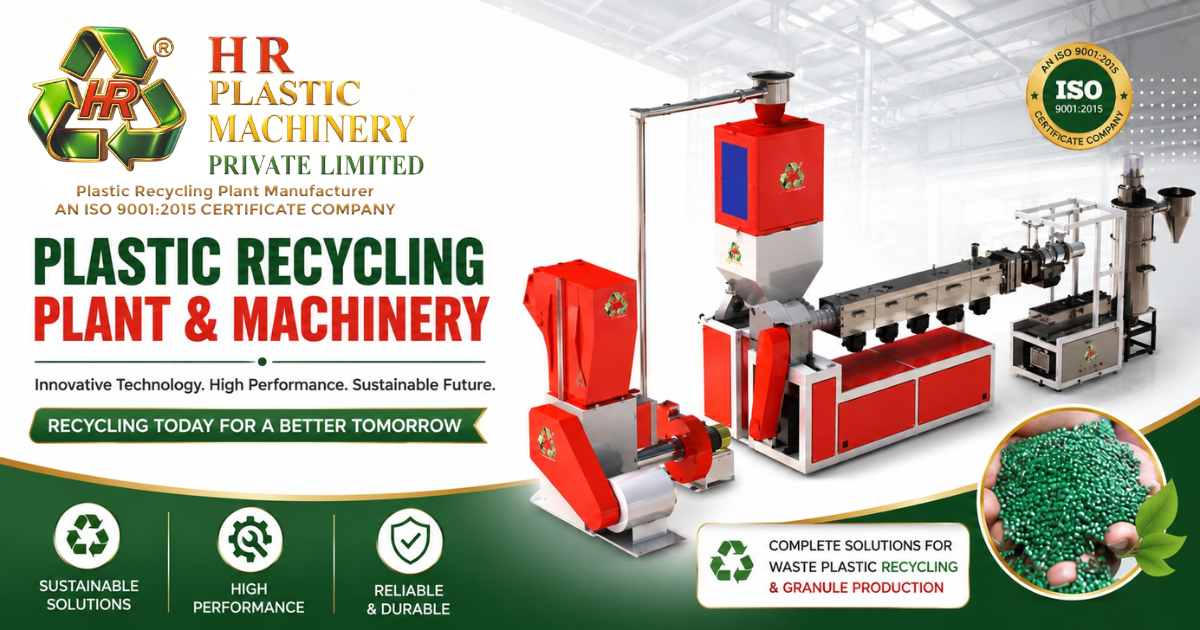
A two stage plastic recycling plant is designed with two extrusion stages operating in sequence. The first stage, commonly referred to as the mother extruder, focuses on melting, filtering, and stabilizing incoming plastic waste. The second stage, known as the baby extruder, further refines the molten material before pelletizing.
This configuration allows better control over material flow, degassing, filtration, and pressure stability. It is particularly effective when processing plastic waste that varies in thickness or contains moisture and contaminants.
How the Mother Baby Recycling Process Works
The recycling process begins by feeding shredded or agglomerated plastic waste into the mother extruder. At this stage, the material is heated, compressed, and partially filtered. Moisture and trapped gases are released, and the melt becomes more uniform.
The molten plastic is then transferred directly into the baby extruder without exposure to air. The baby stage further homogenizes the melt, improves consistency, and prepares it for pelletizing through a die face cutter or strand cutting system. This two-step approach reduces mechanical stress on the screw and barrel while improving overall granule quality.
Key Advantages of Using a Two Stage Recycling Plant
A two stage plastic recycling plant provides operational advantages that are difficult to achieve with single-stage systems. These benefits are especially important for continuous production environments and quality-sensitive applications.
Key advantages include:
Improved melt stability for mixed or difficult plastic waste
Better filtration and contaminant removal
Reduced moisture-related defects in finished granules
Consistent granule size and density
Extended service life of screw, barrel, and gearbox components
These advantages make two stage plants suitable for recycling PP, HDPE, LDPE, non-woven fabric, raffia waste, jumbo bags, and industrial plastic scrap.
Applications Across Industries in Gujarat
Industries across Gujarat depend on recycled plastic granules for a wide range of manufacturing needs. A two stage plastic recycling plant supports multiple application segments by producing uniform and reusable output material.
Common application areas include:
Packaging film and sheet manufacturing
Woven sack and raffia product production
Injection molding raw material preparation
Blow molding and extrusion operations
Plastic compounding and masterbatch processing
Using recycled granules internally helps manufacturers reduce raw material dependence while maintaining production continuity.
Why Two Stage Recycling Plants Are Preferred Over Single Stage Systems
Single stage recycling plants are generally suitable for clean and uniform plastic waste. However, industrial waste in Gujarat often varies in thickness, contamination levels, and moisture content. Two stage plants handle these variations more effectively.
By separating melting and refining functions, each extruder operates under optimized conditions. This reduces load fluctuations, minimizes sudden pressure buildup, and lowers downtime caused by screen choking or inconsistent feeding.
For businesses planning long-term recycling operations, two stage systems offer higher operational stability and more predictable output quality.
Role of Die Face Cutter in Two Stage Recycling Plants
Many two stage plastic recycling plants in Gujarat are equipped with die face cutters. This pelletizing method cuts molten plastic directly at the die surface, producing round and uniform granules.
Die face cutting improves cooling efficiency and eliminates strand breakage issues. It is especially suitable for high-output lines and materials with varying melt flow characteristics, resulting in cleaner granules with minimal dust generation.
Technical Configuration and Customization Flexibility
Two stage recycling plants are available in various capacities and screw sizes, depending on output requirements and material type. Screw and barrel assemblies are typically manufactured from nitrided alloy steel to ensure durability during continuous operation.
Manufacturers in Gujarat often require customization options such as enhanced filtration systems, automatic hopper loaders, agglomerators, or calcium and masterbatch feeding extruders. A flexible plant design allows the system to adapt to future production changes without extensive modifications.
Factors to Consider When Choosing a Two Stage Plastic Recycling Plant
Selecting the right recycling plant involves more than capacity alone. Buyers should evaluate long-term performance, service support, and compatibility with their specific waste material.
Important evaluation factors include:
Type of plastic waste being processed
Required output stability and granule consistency
Screw and barrel material specifications
Gearbox rating and motor configuration
Temperature control accuracy and zoning
Availability of local service and spare parts
A careful assessment helps ensure efficient operation under real production conditions.
Importance of Local Manufacturing and Support in Gujarat
Gujarat has a well-developed ecosystem of plastic machinery manufacturers and service providers. Choosing a locally manufactured two stage plastic recycling plant simplifies installation, maintenance, and technical support.
Local manufacturing enables faster customization, shorter lead times, and easier access to spare components. This is particularly important for recycling plants that operate continuously and require minimal downtime.
Sustainability and Circular Economy Impact
Two stage plastic recycling plants support the circular economy by converting plastic waste into reusable raw material. This reduces landfill dependency, lowers demand for virgin polymers, and helps minimize environmental impact.
In Gujarat, where industrial sustainability is increasingly linked to regulatory compliance and export requirements, reliable recycling infrastructure adds long-term value to manufacturing operations.
Operational Safety and Process Reliability
Modern two stage recycling plants are designed with safety-oriented layouts and controlled automation. Well-designed control panels, precise temperature zoning, and protection systems contribute to safe and stable operation.
Process reliability is improved through consistent feeding, stable melt pressure, and efficient pelletizing. This reduces operator intervention and improves production predictability.
Future Outlook for Plastic Recycling in Gujarat
With growing focus on waste management regulations and recycled material usage, demand for two stage plastic recycling plants in Gujarat is expected to increase steadily. Industries are gradually moving from basic recycling setups to advanced systems that deliver consistent quality and operational efficiency.
As technology evolves, integration with washing lines, shredders, and automated feeding systems is likely to further enhance recycling capabilities.
Frequently Asked Questions
What types of plastic waste can be processed in a two stage recycling plant
A two stage recycling plant can process PP, HDPE, LDPE, non-woven fabric, raffia waste, jumbo bags, industrial scrap, and similar plastic materials with varying thickness and moisture levels.
How does a two stage plant improve granule quality
By separating melting and refining stages, the plant enables better degassing, filtration, and melt homogenization, resulting in uniform and stable granules.
Is a two stage recycling plant suitable for continuous operation
Yes, two stage plants are designed for continuous and heavy-duty operation with stable pressure control and reduced mechanical stress.
What is the role of the baby extruder in the system
The baby extruder refines the molten plastic received from the mother stage and prepares it for pelletizing with improved consistency.
Can the plant be customized for specific production needs
Yes, two stage recycling plants can be customized with different screw sizes, pelletizing systems, feeding arrangements, and auxiliary equipment based on material and output requirements.
Why is Gujarat a strong hub for plastic recycling machinery
Gujarat has a well-established plastic processing industry, skilled manufacturing base, and strong service network, making it a preferred location for plastic recycling machinery.
Get in Touch
Address
Office Address :- 3, Abhishree Industrial Park, B/h. G.V.M.M., Near Odhav Circle, Ahmedabad-382415.
Company Address : 35, Shivalik Industrial Park, Nr. Amba Hotel, Chowkadi, Near Kuha Gam, Ahmedabad to Indor Highway, Ahmedabad-382433.
https://www.hrplasticindia.com/