H.R. PLASTIC MACHINERY PVT. LTD.
Automatic Recycling Plant HD Supplier in Ahmedabad

Automatic Recycling Plant HD Supplier in Ahmedabad
Automatic Recycling Plant HD Supplier in Ahmedabad | HR Plastic Industries
HR Plastic Industries — Ahmedabad
Automatic Recycling Plant HD Supplier in Ahmedabad
Automatic Recycling Plant HD Supplier in Ahmedabad
Plastic waste management has become a critical industrial requirement as manufacturing, packaging, and consumer product sectors continue to expand. An automatic recycling plant designed for HD, PP, LD, and mixed plastic materials plays an essential role in converting post-industrial and post-consumer waste into reusable granules. Businesses searching for an automatic recycling plant HD supplier in Ahmedabad generally seek technically reliable systems that ensure consistent output, stable quality, and long-term operational efficiency.
This article explains how automatic recycling plants function, their technical capabilities, industrial relevance, and the reasons Ahmedabad has emerged as a key center for plastic recycling machinery supply. The content is structured to assist procurement teams, plant owners, and technical decision-makers in evaluating solutions based on performance reliability, process transparency, and alignment with modern recycling requirements.
Understanding the Role of Automatic Recycling Plants in Plastic Processing
Integrated Automation
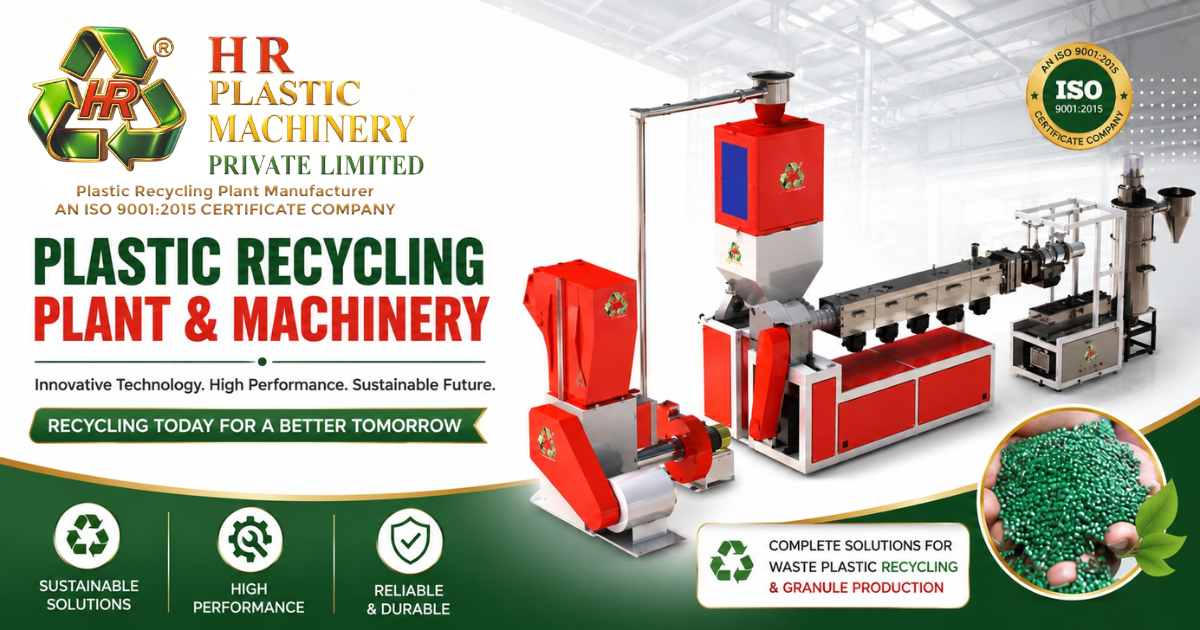
An automatic recycling plant is an integrated system that converts plastic scrap into uniform granules, commonly known as Dana. These granules are reused as raw material in plastic product manufacturing. The system automates critical stages such as sorting, shredding, melting, filtration, extrusion, cooling, and pellet cutting, ensuring consistent output with minimal manual intervention.
Precision Control for HD Materials
In HD plastic recycling, precision control is particularly important. HD materials require stable temperature management, controlled pressure, and efficient filtration to preserve polymer characteristics. Automated control panels, vented screw barrels, and calibrated gearboxes help maintain process stability across varying material types and load conditions. Automation also reduces material loss and limits human dependency during continuous operation.
How an Automatic Dana Making Machine Processes Plastic Waste
1
Collection & Preparation
The recycling process begins with the collection and preparation of plastic waste. HD plastic scrap, along with compatible materials such as PP and LD, is cleaned and shredded into uniform fragments. These fragments are introduced into the recycling plant through a controlled feeding system that regulates material flow.
2
Melting & Venting
Inside the extruder, the material is heated and melted evenly. A vented screw barrel design allows trapped gases and moisture to escape, which is critical for maintaining granule strength and surface consistency. The molten plastic then passes through a filtration system that removes contaminants, ensuring the output meets industrial reuse standards.
3
Extrusion, Cooling & Cutting
After filtration, the melt is extruded through a die to form strands or pelletized directly using a die face cutter system. The material is cooled and cut into uniform granules, making the Dana suitable for injection molding, extrusion, and other plastic processing applications.
Technical Configuration and Performance Range
Automatic recycling plants are available in multiple configurations to suit different production capacities and material profiles. Output capacities typically range from compact systems producing under 100 kg per hour to high-capacity plants exceeding 400 kg per hour. Factors such as screw diameter, motor power, gearbox rating, and screen changer size directly affect throughput and process stability.
Advanced vented screw barrels manufactured from gas-nitrated alloy steel enhance wear resistance and thermal consistency. Industrial-grade gearboxes provide torque stability during continuous extrusion. Control panels with integrated monitoring functions enable operators to maintain optimal processing parameters without frequent manual adjustments.
- Die face cutter systems for direct pelletization
- Automatic hopper loaders for streamlined feeding
- Agglomeration mixers for thin film processing
- Mixed plastic waste stream handling capability
Optional components, including die face cutter systems, automatic hopper loaders, and agglomeration mixers, expand processing flexibility. These options are especially useful when handling thin films, agglomerated scrap, or mixed plastic waste streams.
Industrial Applications of HD Plastic Recycling Plants
Automatic recycling plants are widely used in industries where plastic scrap generation is continuous and demand for recycled raw material is high. These systems support both in-house recycling and commercial granule production for external supply.
Packaging Product Manufacturing
Plastic Container Production
Automotive Component Molding
Household Goods Manufacturing
Agricultural Plastic Products
Industrial Packaging Materials
Consistent granule quality from automated systems allows manufacturers to maintain dimensional accuracy and mechanical performance in finished products.
By converting plastic waste into reusable raw material, recycling plants support circular manufacturing practices and reduce dependence on virgin polymers. This approach aligns with sustainability objectives increasingly adopted by modern manufacturing units.
Why Ahmedabad is a Strategic Location for Recycling Plant Suppliers
Ahmedabad has developed into a major industrial hub for plastic processing, machinery manufacturing, and recycling equipment supply. The region benefits from a strong base of polymer processing industries, skilled technical manpower, and established industrial zones such as Odhav, Vatva, and Kuha.
Proximity to raw material markets and logistics networks enables recycling plant suppliers in Ahmedabad to provide faster installation, responsive service access, and efficient technical support. Close interaction with recycling clusters also allows suppliers to refine machine designs based on real operational feedback.
For buyers across Gujarat and neighboring states, sourcing an automatic recycling plant HD supplier in Ahmedabad offers logistical convenience, technical reliability, and access to experienced engineering expertise.
Industrial ZonesOdhav, Vatva, and Kuha — established polymer processing
corridors
Skilled ManpowerStrong technical workforce and engineering expertise base
Logistics AccessProximity to raw material markets and transport networks
Operational FeedbackReal-world recycling clusters drive continuous machine
design refinement
Operational Benefits of Fully Automated Recycling Systems
Reduced Labor Dependency
Automation minimises manual intervention across feeding, venting, and pelletizing stages.
Improved Energy Efficiency
Optimised processing conditions reduce energy consumption during continuous production runs.
Consistent Material Quality
Controlled conditions deliver uniform granules with stable melt flow properties every cycle.
Enhanced Operational Safety
Automated handling near high-temperature zones limits direct worker exposure and risk.
Lower Rejection Rates
Precise automation reduces output variations and minimises material waste across batches.
Automation delivers measurable operational advantages in plastic recycling operations. Controlled processing conditions reduce variations in granule size and melt flow properties. Automated feeding, venting, and pelletizing systems ensure stable output during extended production runs. These advantages make automated recycling plants suitable for medium- and large-scale operations requiring predictable performance.
From a business perspective, consistent granule output supports accurate production planning and improves downstream manufacturing efficiency. Over time, reduced waste generation and optimized energy usage contribute to improved operating stability.
Selecting the Right Automatic Recycling Plant for HD Materials
Selecting an appropriate recycling plant requires careful evaluation of technical and operational parameters. Material type, contamination level, required output capacity, and available installation space all influence system selection. Buyers should assess screw geometry, venting efficiency, filtration mechanisms, and pelletizing methods based on their specific waste characteristics.
- Assess material type & contamination level
- Evaluate screw geometry & venting efficiency
- Review filtration & pelletizing methods
- Confirm gearbox durability & motor capacity
- Verify spare parts & long-term support access
- Consider future capacity expansion potential
Additional considerations include gearbox durability, motor capacity, ease of maintenance, and control system accessibility. A well-engineered plant should process different plastic grades with minimal adjustments while maintaining stable performance. Long-term availability of spare parts and technical support is also critical for uninterrupted operation.
Working with an experienced supplier helps ensure the selected system meets current production requirements and remains adaptable for future capacity expansion.
Integration with Existing Plastic Processing Lines
Seamless Line Compatibility
Modern recycling plants are designed to integrate smoothly with existing plastic processing infrastructure. Granules produced can be reused directly in extrusion lines, injection molding machines, or film production units. Compatibility with standard processing equipment ensures consistent material flow across the manufacturing cycle.
Extended Production Ecosystem
Internal integration also allows manufacturers to control material quality and traceability rather than relying entirely on external suppliers. As a result, automated recycling systems function as an extension of the production ecosystem rather than a standalone waste-handling unit.
Long-Term Operational Reliability and Maintenance Considerations
Operational reliability is a critical factor in recycling plant performance. High-quality screw barrels, robust gearboxes, and precision-engineered cutters contribute to extended service life. Automated control systems help reduce mechanical stress by maintaining optimal operating conditions throughout production.
Routine maintenance typically involves screen cleaning, cutter inspection, and scheduled lubrication. Systems designed with easy access points simplify maintenance tasks and help minimize downtime. Over time, predictable performance and manageable maintenance requirements make automated recycling plants suitable for continuous industrial use.
For HD plastic processing, consistent venting and filtration remain essential to prevent material degradation and maintain uniform granule quality.
Conclusion
An automatic recycling plant HD supplier in Ahmedabad offers industries access to technically advanced systems that convert plastic waste into valuable reusable raw material. Through automated processing, precise control, and scalable configurations, these plants support efficient recycling while maintaining consistent granule quality.
For manufacturers focused on operational efficiency, sustainability, and long-term material control, investing in a well-engineered automatic recycling plant is a practical and forward-looking decision. Ahmedabad's established industrial ecosystem further enhances supplier reliability, making it a strategic sourcing destination for plastic recycling machinery.
Frequently Asked Questions
What types of plastic materials can be processed in an automatic recycling plant?
Automatic recycling plants are designed to process HD, PP, LD, and
compatible agglomerated plastic materials. With suitable configuration, they can handle mixed plastic
waste commonly generated in industrial environments.
How does automation improve granule quality in HD recycling?
Automation provides precise control over temperature, pressure, and
extrusion speed. This stability prevents material degradation and ensures uniform granules with consistent
physical properties.
Is an automatic Dana making machine suitable for continuous operation?
These machines are engineered for continuous industrial use. Durable
mechanical components and automated controls support stable performance over extended production cycles.
Can the plant be upgraded with additional equipment later?
Most automatic recycling plants support optional equipment such as die face
cutters, hopper loaders, and agglomeration systems, allowing upgrades as production requirements evolve.
Why is vented screw design important in HD plastic recycling?
Vented screw barrels remove moisture and trapped gases during melting,
preventing defects and ensuring consistent strength and surface quality in recycled HD granules.
What factors influence output capacity selection?
Output capacity depends on material type, scrap condition, required
production volume, and available power infrastructure. Proper capacity selection ensures efficient
operation without system overload.
How does a recycling plant support sustainable manufacturing?
By converting plastic waste into reusable granules, recycling plants reduce
environmental impact, conserve resources, and enable circular material use within manufacturing processes.
Recent Posts