monolayer blown film machine manufacturer in india
Expert manufacturer of monolayer blown film machines in India. Discover reliable, high-performance solutions for your plastic film production needs.
What is a Monolayer Blown Film Machine? — Overview
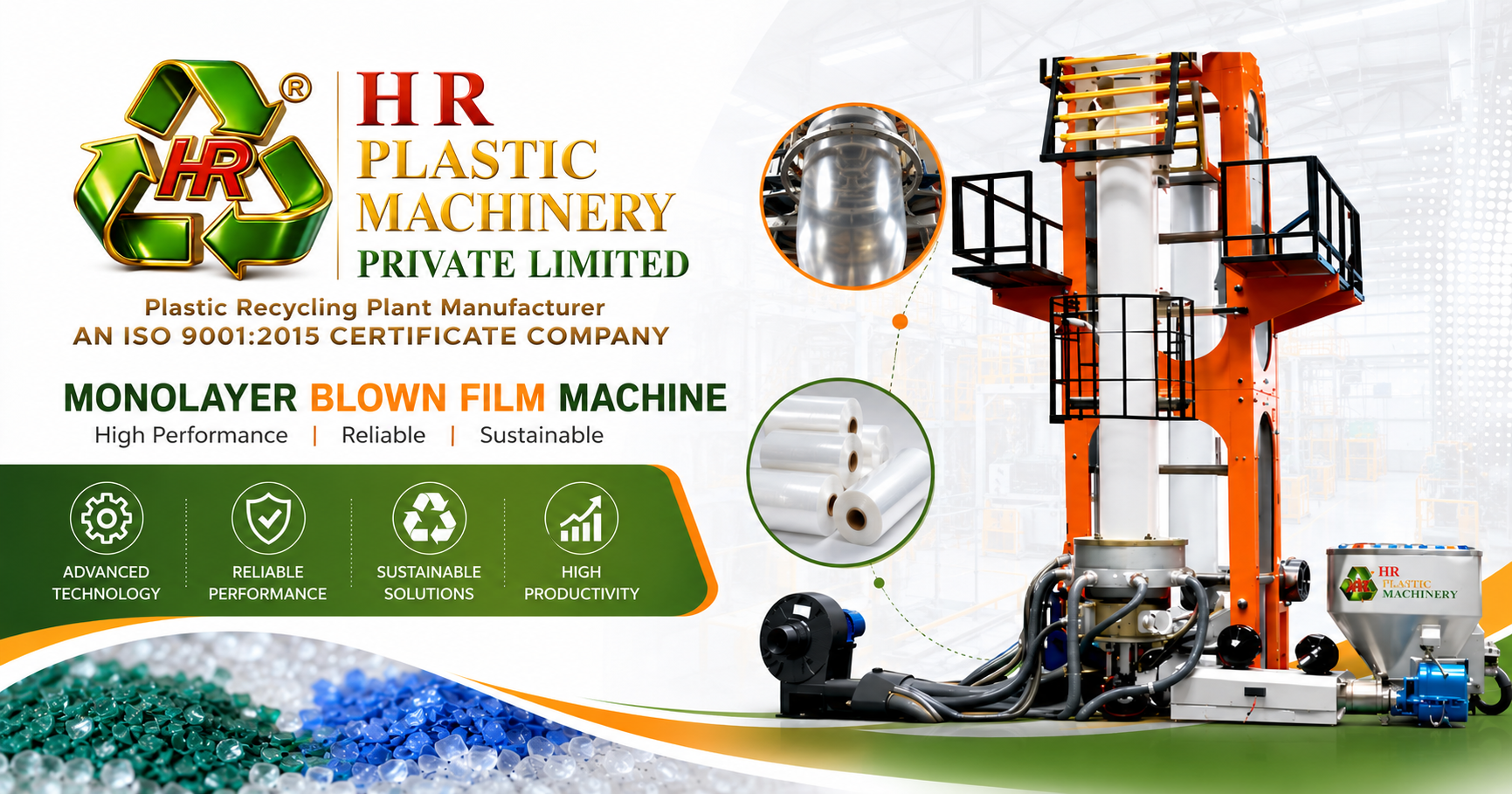
A monolayer blown film machine is a sophisticated piece of industrial equipment designed to produce plastic films from a single layer of polymer. The process begins with plastic pellets (like LDPE, LLDPE, HDPE, PP) being fed into an extruder. Here, they are melted and homogenized under controlled heat and pressure. The molten plastic is then forced through a circular die, forming a thin-walled tube. This tube is inflated with air, expanding it like a bubble, and then cooled rapidly as it ascends. Finally, the bubble is collapsed and passed through nip rollers, where it is flattened into a lay-flat tube or slit into sheets, ready for further processing or use.
Key Features and Technical Specifications
When evaluating monolayer blown film machines, several technical aspects are crucial for ensuring optimal performance and suitability for specific production needs. Manufacturers like HR Plastic Machinery focus on integrating features that enhance efficiency, durability, and product quality.
- Extruder Screw Design: Optimized screw geometry for uniform melting and mixing of various polymers.
- Die Configuration: Precision-engineered circular die for consistent film thickness and bubble stability.
- Cooling System: Efficient air ring and cooling mechanisms for rapid and uniform film solidification.
- Take-off Unit: Robust nip rollers and haul-off system for controlled film tension and speed.
- Winding Mechanism: High-speed, automatic surface or center winding systems for seamless roll production.
- Control System: Advanced PLC-based controls for precise temperature, speed, and tension management.
- Material Compatibility: Ability to process a range of thermoplastic resins including LDPE, LLDPE, HDPE, and PP.
- Output Capacity: Variable throughput rates to match production volume requirements.
Industrial Applications and Use Cases
The films produced by monolayer blown film machines are indispensable across numerous industries, highlighting the versatility and importance of this equipment.
- Food Packaging: Creating films for snacks, grains, frozen foods, and other perishable items.
- Agricultural Films: Manufacturing mulch films, greenhouse covers, and silage wraps.
- Industrial Packaging: Producing shrink films, stretch films, and protective wraps for goods.
- Garment Bags: Extruding films for polybags used in clothing and textile packaging.
- Liners: Making liners for drums, boxes, and garbage bags.
- Consumer Goods Packaging: Films for household products, toys, and general retail items.
- Construction: Films used in temporary coverings or as vapor barriers.
- Medical Packaging: Specialized films for sterile packaging applications.
How to Choose the Right Monolayer Blown Film Machine
Selecting the appropriate monolayer blown film machine involves careful consideration of your specific operational requirements and production goals. A thorough evaluation ensures you invest in equipment that delivers maximum value and longevity.
- Production Volume & Speed: Determine the daily or hourly output required to meet market demand.
- Film Width and Thickness: Specify the range of lay-flat widths and film thicknesses you need to produce.
- Material Type: Confirm the machine's capability to process your intended raw materials (LDPE, LLDPE, HDPE, PP, etc.).
- Die Diameter and Gap: Ensure these are suitable for the desired film properties and output.
- Automation Level: Decide on the degree of automation required for feeding, winding, and control.
- Ancillary Equipment: Consider necessary supporting machines like chillers, blenders, and slitters.
- Manufacturer's Reputation & Support: Research the supplier's track record, after-sales service, and spare parts availability.
- Energy Efficiency: Look for machines designed with energy-saving features to reduce operational costs.
Quality Standards and Compliance
For any industrial machinery, adherence to recognized quality standards and compliance with industry regulations is non-negotiable. Manufacturers committed to excellence ensure their machines are built to last and perform reliably. In India, while specific mandatory standards for blown film machines might vary, manufacturers often align with international benchmarks like ISO certifications for quality management systems. Buyers should look for evidence of robust construction, use of high-grade materials, and adherence to safety protocols. A machine that meets stringent internal quality control measures is more likely to offer consistent performance and a longer operational lifespan.
Why HR Plastic Machinery's Experience and Capability Matters
Established in 1987, HR Plastic Machinery Pvt. Ltd. brings decades of hands-on experience in manufacturing plastic processing equipment. This extensive history translates into a deep understanding of the nuances of plastic extrusion and film production. Our manufacturing processes are refined, focusing on precision engineering and the use of durable components to ensure each machine is built for reliability and high output. Our technical team comprises skilled engineers and technicians with specialized knowledge in blown film technology, enabling us to offer not just standard models but also customized solutions tailored to unique client requirements.
We pride ourselves on a rigorous quality control system that scrutinizes every stage of production, from material sourcing to final testing. This commitment ensures that every monolayer blown film machine leaving our facility meets exacting standards. Furthermore, our capability extends to providing comprehensive after-sales support, including installation assistance, operator training, and prompt availability of spare parts, ensuring minimal downtime for our clients across India.
Installation, Maintenance, and Care Tips
Proper installation and regular maintenance are critical for the longevity and optimal performance of your monolayer blown film machine. Following best practices will minimize operational issues and ensure consistent film quality.
- Installation: Ensure the machine is installed on a level, stable foundation in a well-ventilated area. Connect all electrical and pneumatic lines according to the manufacturer's specifications. Calibrate temperature controllers and tension settings before the first run.
- Daily Checks: Before operation, inspect the extruder barrel, die, and cooling ring for any debris. Check lubricant levels in gearboxes and bearings. Verify that all safety guards are in place.
- Regular Cleaning: Clean the extruder screw, barrel, and die regularly, especially when changing polymer types or colors. Accumulated residue can affect film quality and machine performance.
- Lubrication: Follow the recommended lubrication schedule for all moving parts, including bearings, gearboxes, and drive chains.
- Component Inspection: Periodically inspect wear parts such as the screw, barrel, die lips, and nip rollers for signs of wear. Replace them proactively to prevent production disruptions and maintain film quality.
- Electrical & Control Systems: Keep electrical panels clean and free from dust. Regularly check sensor readings and control parameters to ensure they are within specified ranges.
- Troubleshooting: Familiarize yourself with common issues and their solutions as outlined in the operation manual. Promptly address any unusual noises or vibrations.
Frequently Asked Questions
Monolayer blown film machines are designed to process a variety of thermoplastic resins, including Low-Density Polyethylene (LDPE), Linear Low-Density Polyethylene (LLDPE), High-Density Polyethylene (HDPE), and Polypropylene (PP). The specific capabilities depend on the machine's extruder screw design and die configuration.
Blown film extrusion involves inflating a molten plastic tube with air to create a bubble, which is then cooled and collapsed. Cast film extrusion, conversely, extrudes molten plastic onto a chilled roller. Blown film typically offers better tensile strength and barrier properties in the machine direction.
Film quality is influenced by several factors, including the consistency of the raw material, the precision of the extruder and die, the effectiveness of the cooling system, the control of bubble stability, and the tension applied during take-off and winding. Proper machine maintenance is also crucial.
The output capacity can vary significantly based on the machine's size, screw diameter, motor power, and the specific polymer being processed. Smaller machines might produce a few kilograms per hour, while larger, industrial-grade machines can achieve outputs of hundreds of kilograms per hour.
Regular maintenance includes cleaning the extruder, die, and cooling components, lubricating moving parts, inspecting wear parts like the screw and die, and checking electrical and control systems. A preventive maintenance schedule, as per the manufacturer's guidelines, is highly recommended.
Yes, manufacturers like HR Plastic Machinery often offer customization options. This can include modifying the screw design for specific materials, adjusting die sizes for different film widths, or integrating specialized winding systems to meet unique production requirements.
Conclusion
For businesses in India seeking to establish or enhance their plastic film production capabilities, investing in a reliable monolayer blown film machine is a strategic decision. The machine's ability to efficiently produce a wide array of films for diverse applications makes it a cornerstone of the packaging and manufacturing sectors. When selecting a manufacturer, prioritize those with a proven track record, a commitment to quality engineering, and comprehensive after-sales support. Understanding the technical specifications, application suitability, and maintenance requirements will ensure a productive and long-lasting partnership with your chosen machinery provider.
Get In Touch
Hr Plastic Machinery Pvt. Ltd.