H.R. PLASTIC MACHINERY PVT. LTD.
Automatic Recycling Plant PP Supplier in Gujarat

Automatic Recycling Plant PP Supplier in Gujarat
Automatic Recycling Plant PP Supplier in Gujarat | HR Plastic Industries
Automatic Recycling Plant PP Supplier in Gujarat
Advanced Polypropylene Recycling Solutions | Ahmedabad, Gujarat
Industrial Plastic Waste Management Solutions
Plastic waste management has become a critical industrial requirement as manufacturers increasingly focus on material recovery, sustainability, and process efficiency. An automatic recycling plant PP supplier in Gujarat plays an important role in supporting plastic processors, recyclers, and manufacturers that rely on consistent-quality polypropylene granules for downstream applications. Gujarat, as a major hub for plastic processing and industrial manufacturing, has seen steady growth in demand for automated PP recycling systems capable of handling high volumes while maintaining material uniformity.
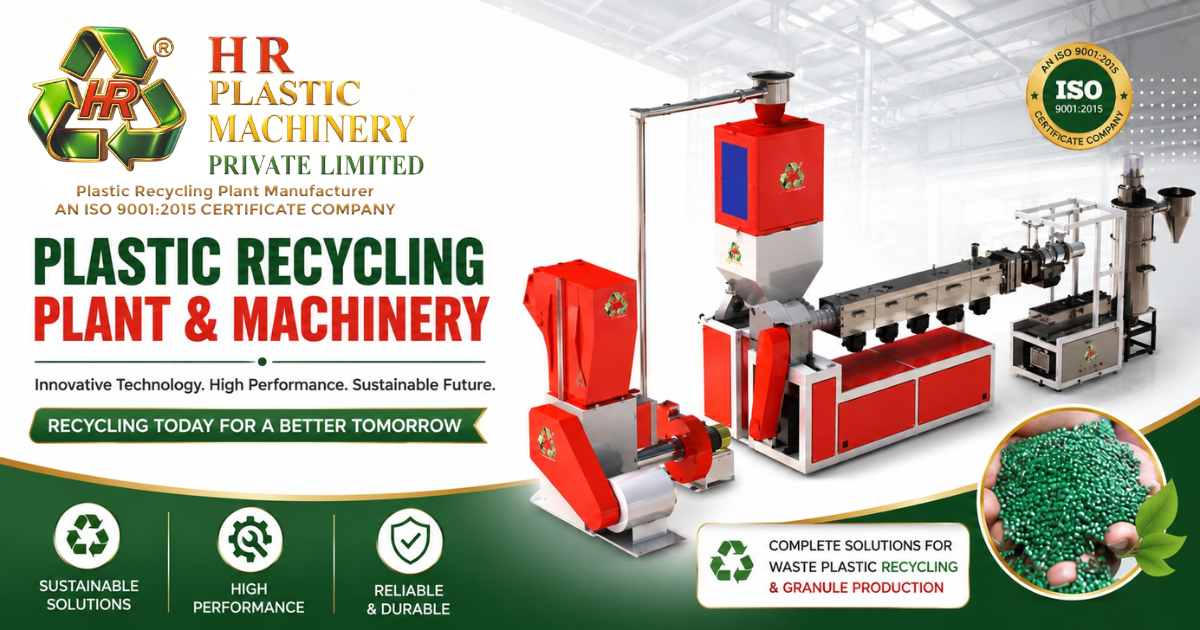
Automatic recycling plants for PP are engineered to convert post-industrial and post-consumer plastic waste into reusable granules through controlled and repeatable processes. These systems function as integrated recycling lines rather than standalone machines, combining multiple processing stages into a continuous workflow. The core objective is to reduce contamination, stabilize melt characteristics, and produce uniform pellets suitable for reuse in manufacturing operations.
Understanding Automatic PP Recycling Plant Technology
An automatic PP recycling plant operates as a coordinated system in which each stage is synchronized to maintain smooth material flow and consistent output. Compared to semi-automatic or manual setups, automated plants rely on precise mechanical control and continuous process monitoring to minimize variation in granule quality.
The process begins with feeding PP plastic waste, which may include agglomerated material, chips, or shredded scrap. This material enters the extrusion system, where controlled heating and compression convert solid plastic into a homogeneous molten state. Advanced filtration and screen-changing systems remove impurities that could affect material performance. The molten polymer is then shaped and cut into granules using pelletizing or die-face cutting methods.
Automation enables stable control of temperature zones, pressure levels, and output speeds throughout the production cycle. This stability is essential for producing PP Dana suitable for injection molding, extrusion, and other plastic processing applications.
Why Gujarat Is a Key Market for PP Recycling Plants
Gujarat has established itself as one of India's most significant industrial regions for plastic manufacturing and recycling. The concentration of large-scale processors, packaging manufacturers, and export-oriented units has created sustained demand for recycled PP granules. With increasing regulatory focus on waste management, many industries are adopting in-house or dedicated recycling solutions instead of depending entirely on external suppliers.
An automatic recycling plant PP supplier in Gujarat supports this transition by offering systems aligned with local operating conditions, raw material availability, and production requirements. Proximity to industrial clusters also simplifies logistics, installation, commissioning, and long-term technical coordination for plant operators.
Demand for automated PP recycling solutions continues to grow across small, medium, and large manufacturing units as companies work to balance cost efficiency with environmental responsibility.
Core Components of an Automatic Recycling Plant for PP
An automatic recycling plant integrates multiple mechanical and processing units into a single operational line, with each component contributing to output quality and process stability.
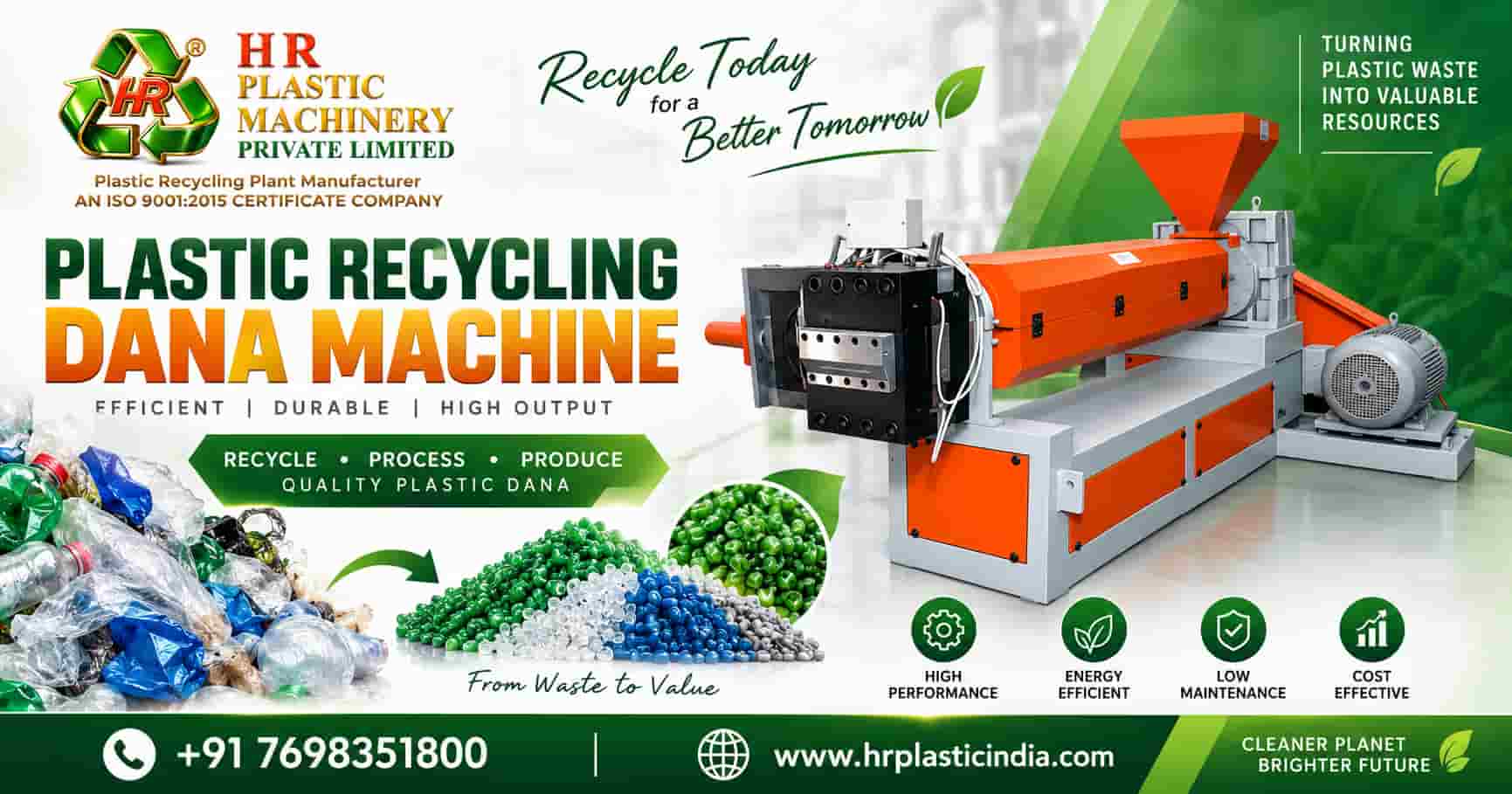
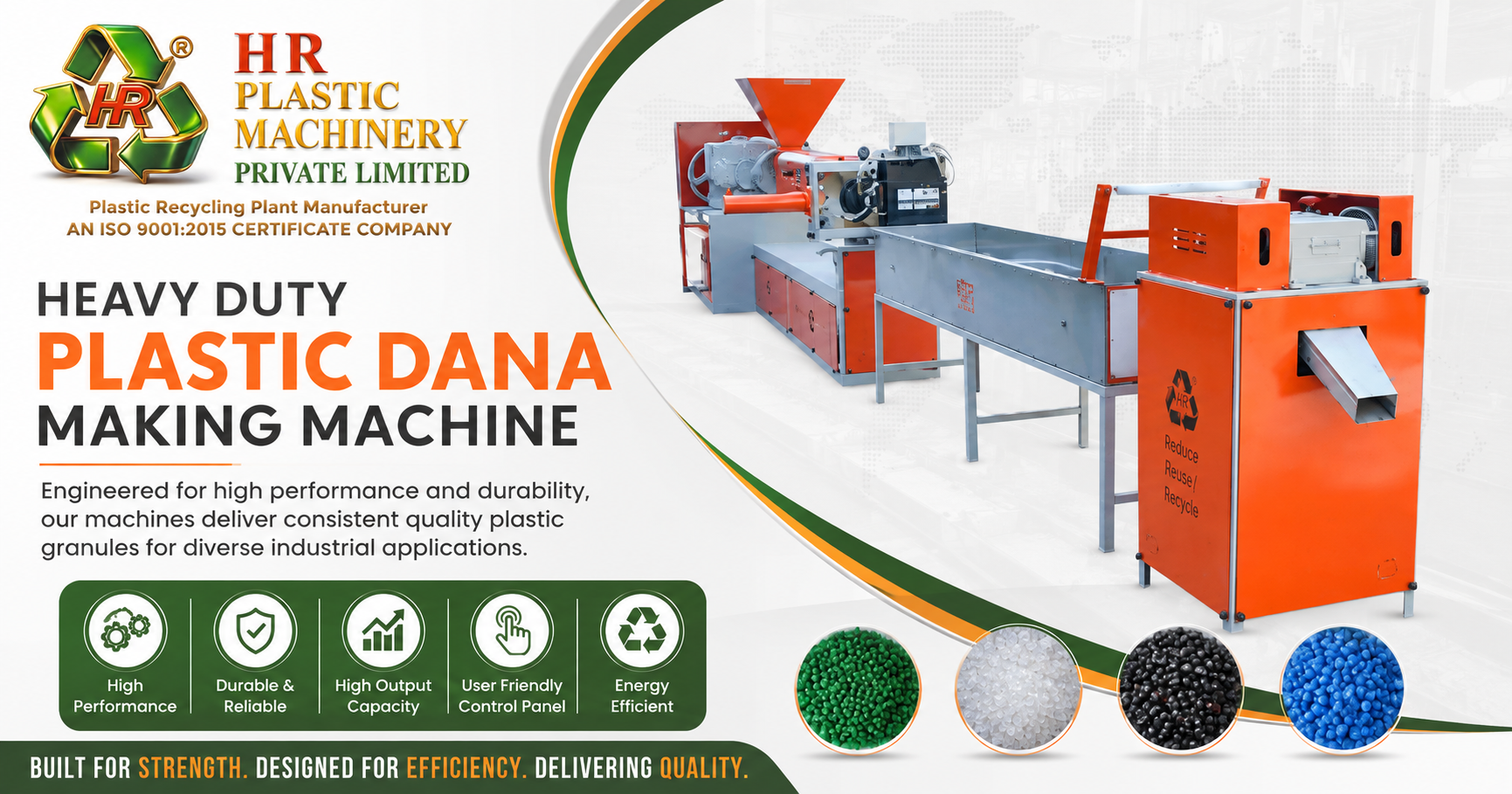
The system typically includes material feeding mechanisms, extrusion units, filtration assemblies, pelletizing equipment, and cooling arrangements. Screw and barrel assemblies are engineered to suit PP material characteristics such as melt temperature and viscosity. Gearboxes and drive motors are selected based on required throughput and continuous-duty performance.
Control panels, sensors, and monitoring systems regulate process parameters across the line. This level of control reduces reliance on manual intervention and improves repeatability across production batches, resulting in consistent PP granules suitable for reuse with minimal adjustment.
Applications of Recycled PP Granules
Recycled PP granules produced through automatic recycling plants are used across a wide range of industries. Their performance depends on controlled processing and effective removal of contaminants during recycling.
- Injection molding for household and industrial components
- Extrusion of sheets and profiles
- Automotive plastic parts
- Electrical and appliance housings
- Industrial containers
Consistent granule quality allows manufacturers to incorporate recycled PP into production without affecting functional requirements.
Operational Advantages of Automated PP Recycling Systems
Automation provides operational benefits that extend beyond higher output capacity. By maintaining standardized processing conditions, automated systems help reduce material loss and improve overall energy efficiency.
- Stable output quality over long production runs
- Reduced dependence on skilled manual labor
- Improved recovery from mixed PP waste streams
- Lower downtime caused by process variation
- Better control over melt quality and contamination
These factors make automatic recycling plants suitable for long-term operational planning rather than short-term capacity expansion.
Process Flow in an Automatic PP Recycling Plant
The operation of an automatic PP recycling plant follows a structured and repeatable sequence designed to protect material integrity. Each stage is synchronized through automated controls.
- 1 Collection and preparation of PP waste
- 2 Controlled melting through extrusion
- 3 Filtration to remove impurities
- 4 Pelletizing or die-face cutting
- 5 Cooling for uniform granule formation
Continuous monitoring ensures stable operating conditions and minimizes variation in granule size, shape, and material properties.
Considerations When Selecting a PP Recycling Plant Supplier
Selecting an automatic recycling plant PP supplier in Gujarat requires careful assessment of technical capability and process compatibility. Recycling systems must be matched to the specific type of PP material being processed, whether post-industrial scrap or mixed plastic waste.
- Material compatibility
- Output capacity aligned with production needs
- Quality of screw, barrel, and filtration components
- Availability of technical support and spare parts
- Ability to scale the system for future expansion
Proper alignment between plant design and application improves long-term performance and reduces operational disruptions.
Role of Automation in Quality Control
Maintaining consistent quality is one of the primary challenges in plastic recycling. Automated recycling plants address this by minimizing human error and maintaining precise control over key processing variables. Sensors continuously monitor temperature, pressure, and material flow, allowing automatic adjustments when deviations occur.
This level of control ensures that PP granules meet internal quality standards and downstream processing requirements. Automation also supports documentation and traceability, which are increasingly important for compliance and sustainability reporting.
Environmental and Industrial Impact
Automatic PP recycling plants contribute to waste reduction and resource conservation by converting plastic waste into reusable raw material. This reduces dependence on landfills and lowers demand for virgin plastic production.
From an industrial perspective, these systems support circular manufacturing models in which waste is reintegrated into production cycles. This approach aligns with evolving environmental standards and long-term sustainability objectives across the plastic processing industry.
Conclusion
An automatic recycling plant PP supplier in Gujarat supports industries that require reliable, consistent, and scalable solutions for plastic waste reprocessing. Automated recycling systems convert polypropylene waste into reusable granules through controlled and repeatable processes that improve material quality and operational efficiency. As demand for sustainable manufacturing continues to grow, automatic PP recycling plants play an important role in enabling circular material use while supporting long-term production stability.
Frequently Asked Questions
What types of PP materials can be processed in an automatic recycling plant?
Automatic PP recycling plants can process a wide range of polypropylene waste, including agglomerated material, chips, and processed scrap, provided the input material is properly prepared before extrusion.
How does automation improve recycling plant efficiency?
Automation improves efficiency by maintaining stable processing conditions, reducing manual intervention, and minimizing output variation, leading to consistent granule quality and higher material recovery.
Is recycled PP suitable for industrial manufacturing applications?
Recycled PP granules produced through controlled automatic recycling processes are commonly used in injection molding, extrusion, and other applications that require material consistency.
What factors influence the output capacity of a PP recycling plant?
Output capacity is influenced by screw size, motor power, gearbox configuration, material quality, and operating parameters such as temperature and pressure control.
Why is Gujarat a preferred location for PP recycling plant suppliers?
Gujarat offers strong industrial infrastructure, access to plastic processing clusters, and logistical advantages that support manufacturing, installation, and technical coordination.
How does filtration affect recycled PP quality?
Filtration removes contaminants from molten plastic, improving granule purity and reducing the risk of defects in downstream manufacturing.
Get in Touch
Recent Posts