H.R. PLASTIC MACHINERY PVT. LTD.
Dana Making Machine PP Manufacturer in India

Dana Making Machine PP Manufacturer in India
Dana Making Machine PP Manufacturer in India | HR Plastic Industries
Dana Making Machine PP Manufacturer in India
Plastic recycling has become a critical component of modern industrial operations, particularly in India where significant volumes of polypropylene (PP) waste are generated from packaging, woven sacks, household items, automotive components, and industrial applications. A Dana Making Machine PP manufacturer in India plays an important role in converting post-industrial and post-consumer PP waste into reusable granules that can be reintroduced into the production cycle.
A PP dana making machine processes plastic scrap through extrusion, filtration, and pelletizing systems to produce uniform plastic granules suitable for reuse in manufacturing. With increasing regulatory focus on sustainable waste management and circular economy practices, industries are investing in reliable recycling machinery that ensures consistent output, operational safety, and energy efficiency.
Understanding PP Dana Making Machine Technology
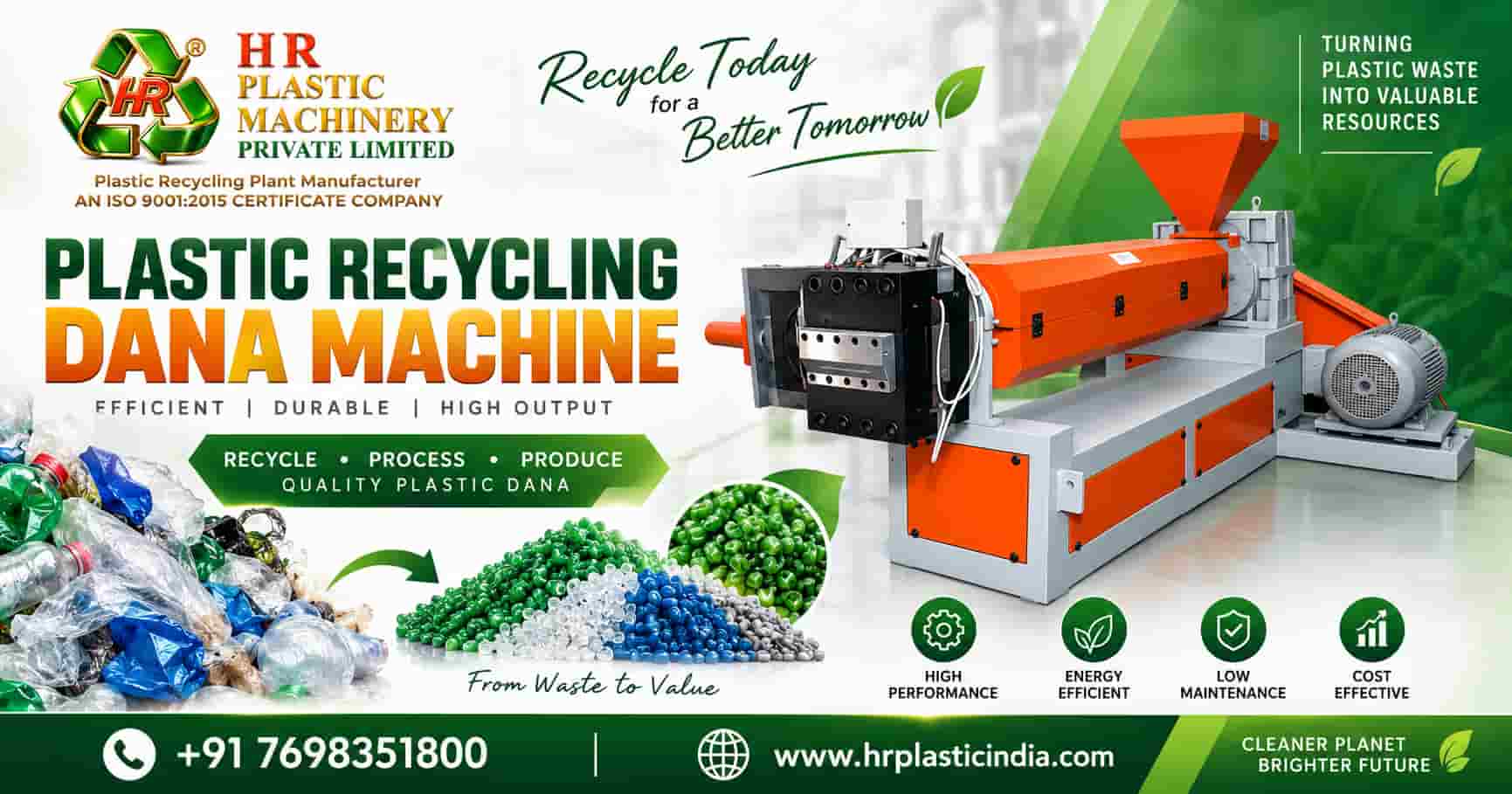
A polypropylene dana making machine operates on the extrusion and pelletizing principle. PP waste material is cleaned and prepared before being fed into the extruder. Inside the machine, the plastic is melted, filtered, and then cut into uniform granules using systems such as die face cutters or strand pelletizers.
The die face cutter system provides precise and consistent granule size directly at the die head, enhancing quality control and reducing post-processing requirements. Advanced machines incorporate temperature control zones, vented screw barrels, heavy-duty gearboxes, and automated control panels to maintain stable operating conditions throughout the recycling process.
Output capacity depends on model configuration, screw diameter, motor power, and raw material type. Modern PP dana machines can process LDPE, PP, HDPE, raffia, BOPP, and other polyolefin materials with minimal manual intervention.
Key Functional Components of a PP Dana Making Machine
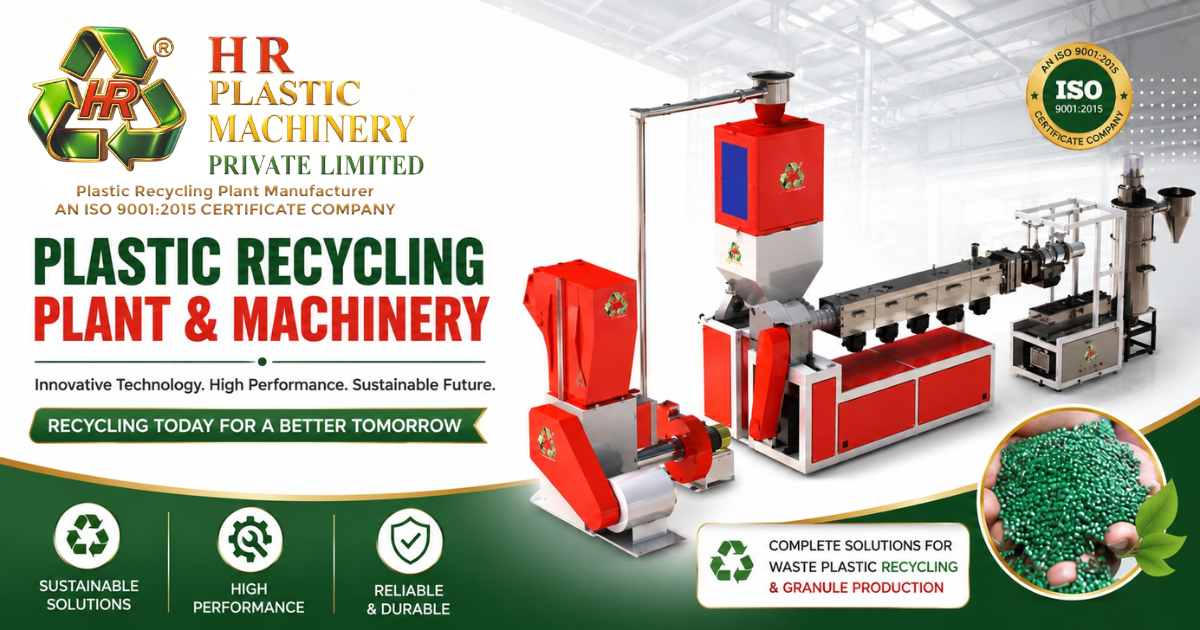
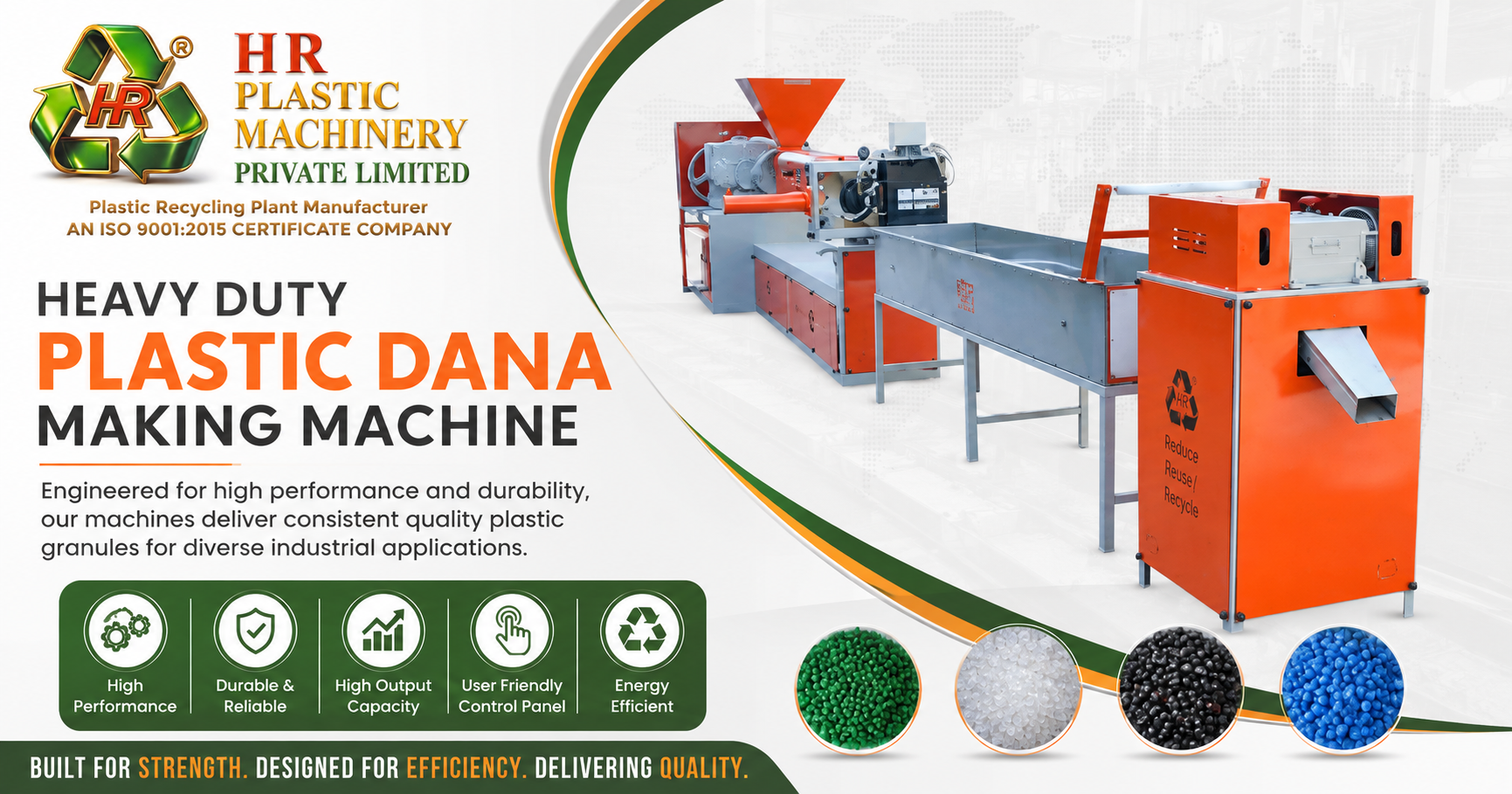
A high-performance PP granules making machine typically includes the following components:
- Single screw or vented extruder system
- EN 41 B screw barrel with nitriding treatment
- Heavy-duty gearbox for torque transmission
- Multi-zone temperature control panel
- Hydraulic or manual screen changer
- Die face cutter pelletizing system
- Automatic hopper loader
- Cooling and granule collection unit
- Grinder for scrap size reduction
Each component contributes to maintaining uniform melt flow, effective impurity filtration, consistent pellet shape, and stable output quality.
Why PP Recycling Demand is Growing in India
Plastic consumption in India continues to grow across sectors such as packaging, agriculture, automotive, infrastructure, and consumer goods. Polypropylene remains one of the most widely used thermoplastics due to its strength, chemical resistance, and versatility.
At the same time, unmanaged plastic waste presents environmental challenges. Government regulations, sustainability initiatives, and cost optimization strategies have accelerated demand for plastic recycling machines in India. Many manufacturers are now adopting in-house recycling units to reduce raw material dependence and production waste.
A Dana Making Machine PP manufacturer in India supports this shift by supplying equipment that converts waste PP articles into reusable granules suitable for injection molding, extrusion, and other downstream applications.
Applications of PP Dana Produced by Recycling Machines
Recycled PP granules are used across multiple industries. Common applications include:
- Injection molded components
- Household plastic products
- Woven sacks and raffia products
- Automotive interior parts
- Industrial containers
- Pipe fittings and plastic accessories
- Non-critical packaging materials
Uniform granule size and controlled melt flow index are essential for consistent product performance. For this reason, precision cutting and stable extrusion are central to recycling efficiency.
Operational Process of PP Dana Making Machine
The recycling and granulation process follows structured stages to ensure material purity and consistent output:
- Collection and segregation of PP plastic waste
- Crushing or grinding of scrap material
- Feeding into the extruder through a hopper loader
- Controlled melting inside the screw barrel
- Filtration through a screen changer to remove impurities
- Die face cutting or strand pelletizing
- Cooling and collection of plastic granules
Each stage must be monitored carefully to prevent contamination, overheating, or inconsistent pellet formation.
Factors to Consider When Choosing a PP Dana Making Machine
Selecting the right machine requires technical evaluation rather than a price-driven decision. Important considerations include:
- Required output capacity per hour
- Type of PP waste being processed
- Power consumption and motor rating
- Screw diameter and barrel design
- Type of pelletizing system
- Availability of vented extrusion
- Ease of maintenance and spare part support
- Automation level of the control panel
Industrial buyers should assess long-term operational efficiency, machine durability, and service reliability before finalizing procurement.
Technical Configuration and Capacity Range
Modern PP dana making machines are available in multiple configurations with varying output capacities. Depending on plant size and production requirements, machines may range from small-scale units producing 60–80 kg per hour to higher-capacity systems exceeding 200 kg per hour.
Screw diameters typically range from 75 mm to 110 mm or higher, while motor capacities may vary between 30 HP and 60 HP depending on configuration. Multi-zone temperature control ensures stable melting conditions, and robust gearboxes maintain torque efficiency during continuous operation.
Vented screw barrel systems assist in moisture removal and gas release during melting, improving granule quality and reducing material defects.
Energy Efficiency and Safety Standards
Energy consumption is a major operational cost in plastic recycling facilities. A well-designed PP recycling machine integrates optimized heater bands, efficient motor systems, and stable extrusion mechanisms to reduce power wastage.
Safety features such as overload protection, emergency stop systems, insulated panels, and controlled heating zones help protect operators and extend machine life. Compliance with industrial electrical standards and structured wiring layouts further enhances reliability and safe operation.
Maintenance and Long-Term Reliability
Routine maintenance is essential to sustain machine performance. Screw barrel cleaning, screen changer replacement, gearbox lubrication, and temperature calibration should be carried out at scheduled intervals.
Reputable manufacturers design machines with accessible service panels, standardized spare parts, and durable mechanical components to minimize downtime. Availability of technical guidance and structured after-sales support also contributes to smooth and uninterrupted plant operations.
How Indian Manufacturers Support Industrial Recycling
A Dana Making Machine PP manufacturer in India generally offers customization to match specific recycling requirements. Whether processing woven bag scrap, molded PP articles, or mixed polyolefin waste, machine configuration can be adjusted in terms of screw design, motor capacity, pelletizing system, and filtration method.
Indian manufacturing facilities are increasingly integrating automation, digital monitoring systems, and heavy-duty fabrication standards to align with global performance benchmarks. Industrial buyers now prioritize technical capability, material quality, and operational stability over marketing claims.
Role in Sustainable Plastic Waste Management
Recycling PP waste into reusable granules reduces landfill dependency and lowers consumption of virgin polymer. By installing PP dana machines, industries contribute to responsible waste management while maintaining production efficiency.
Converting plastic scrap into usable raw material supports circular manufacturing models, reduces environmental impact, and improves resource utilization. As sustainability compliance becomes stricter across sectors, investment in plastic recycling machinery is expected to grow steadily across India.
Conclusion
The demand for efficient plastic recycling infrastructure in India continues to rise as industries seek sustainable and cost-effective production solutions. A Dana Making Machine PP manufacturer in India supports this transition by providing extrusion-based granulation systems capable of converting PP waste into reusable plastic granules.
By focusing on consistent pellet quality, energy efficiency, functional reliability, and safe operation, these machines form a vital part of the plastic recycling ecosystem. For industrial buyers, careful evaluation of technical configuration, output capacity, and long-term performance remains essential when selecting the appropriate PP dana making machine for their recycling operations.
Frequently Asked Questions
What materials can a PP dana making machine process?
A PP dana making machine primarily processes polypropylene scrap, including woven bags, molded articles, raffia waste, and industrial PP scrap. Depending on configuration, many machines can also handle LDPE, HDPE, and similar polyolefin materials.
How does a die face cutter system improve granule quality?
The die face cutter system cuts molten plastic directly at the die head, ensuring uniform pellet size and shape. This enhances consistency, reduces manual handling, and improves downstream processing performance.
What is the typical output capacity of a PP recycling machine?
Output capacity depends on screw diameter, motor power, and raw material condition. Machines can range from smaller units producing around 60 kg per hour to larger systems exceeding 200 kg per hour.
Is vented extrusion necessary in PP recycling?
Vented extrusion helps remove moisture and trapped gases from melted plastic, improving granule quality and reducing defects. It is particularly beneficial when processing moisture-prone or contaminated scrap.
How important is temperature control in PP granule production?
Accurate temperature control ensures proper melting without degrading the polymer. Multi-zone control panels maintain stable processing conditions throughout the extrusion barrel.
What maintenance is required for long-term operation?
Regular screw cleaning, timely screen replacement, gearbox lubrication, and inspection of heating zones are necessary to maintain efficiency and extend machine lifespan.
Get in Touch
Recent Posts