H.R. PLASTIC MACHINERY PVT. LTD.
LDPE Dana Machine

LDPE Dana Machine
LDPE Dana Machine | LDPE Granule Making Line Manufacturer in India
LDPE Dana Machine – LDPE Granules Making Line
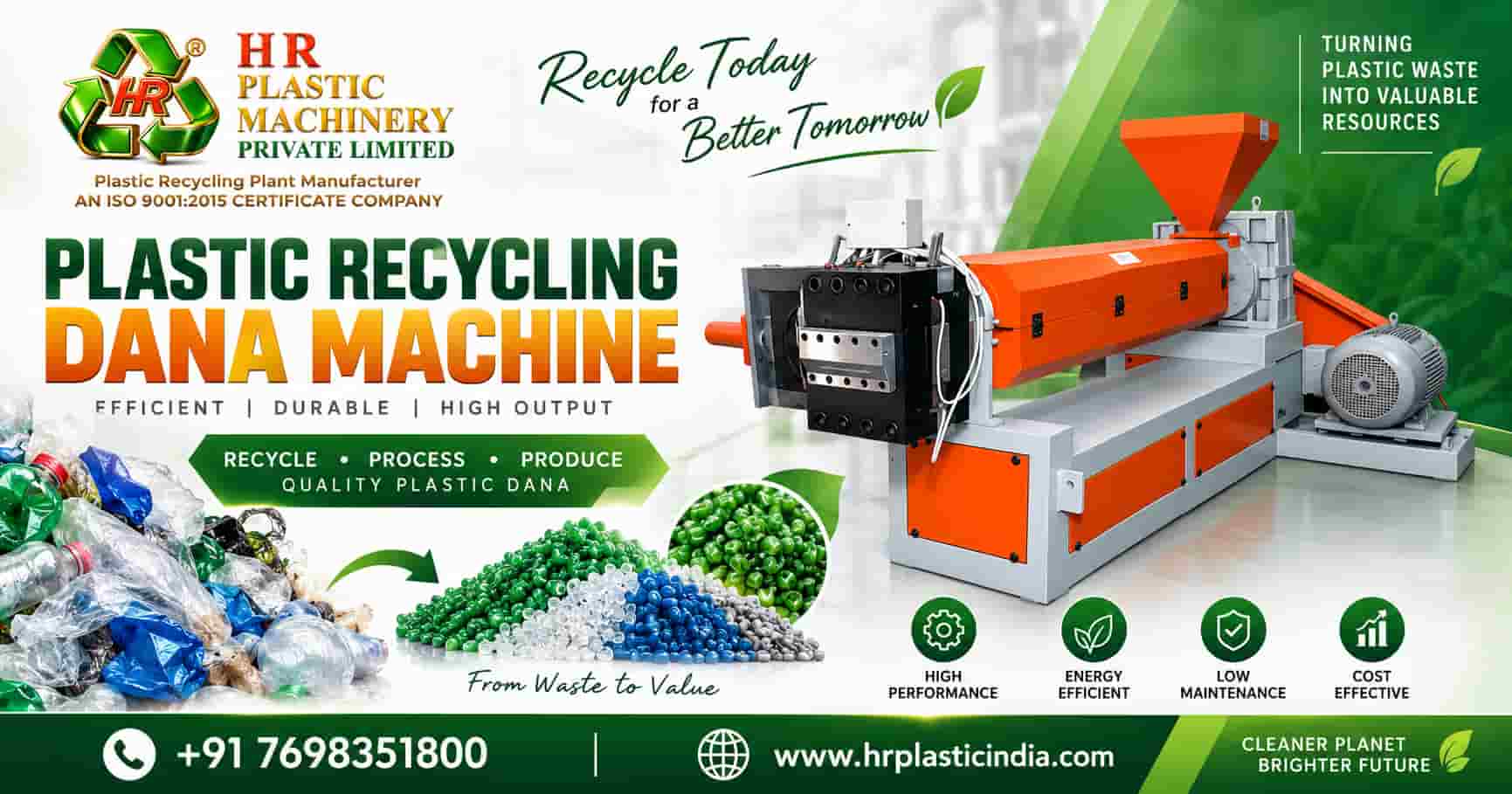
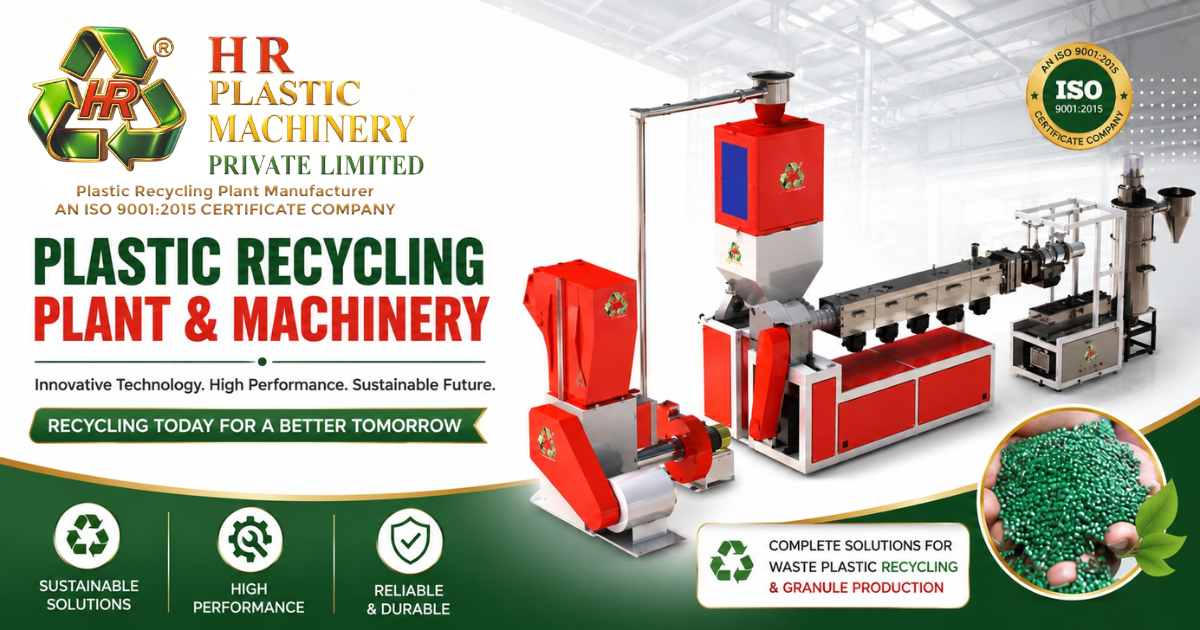
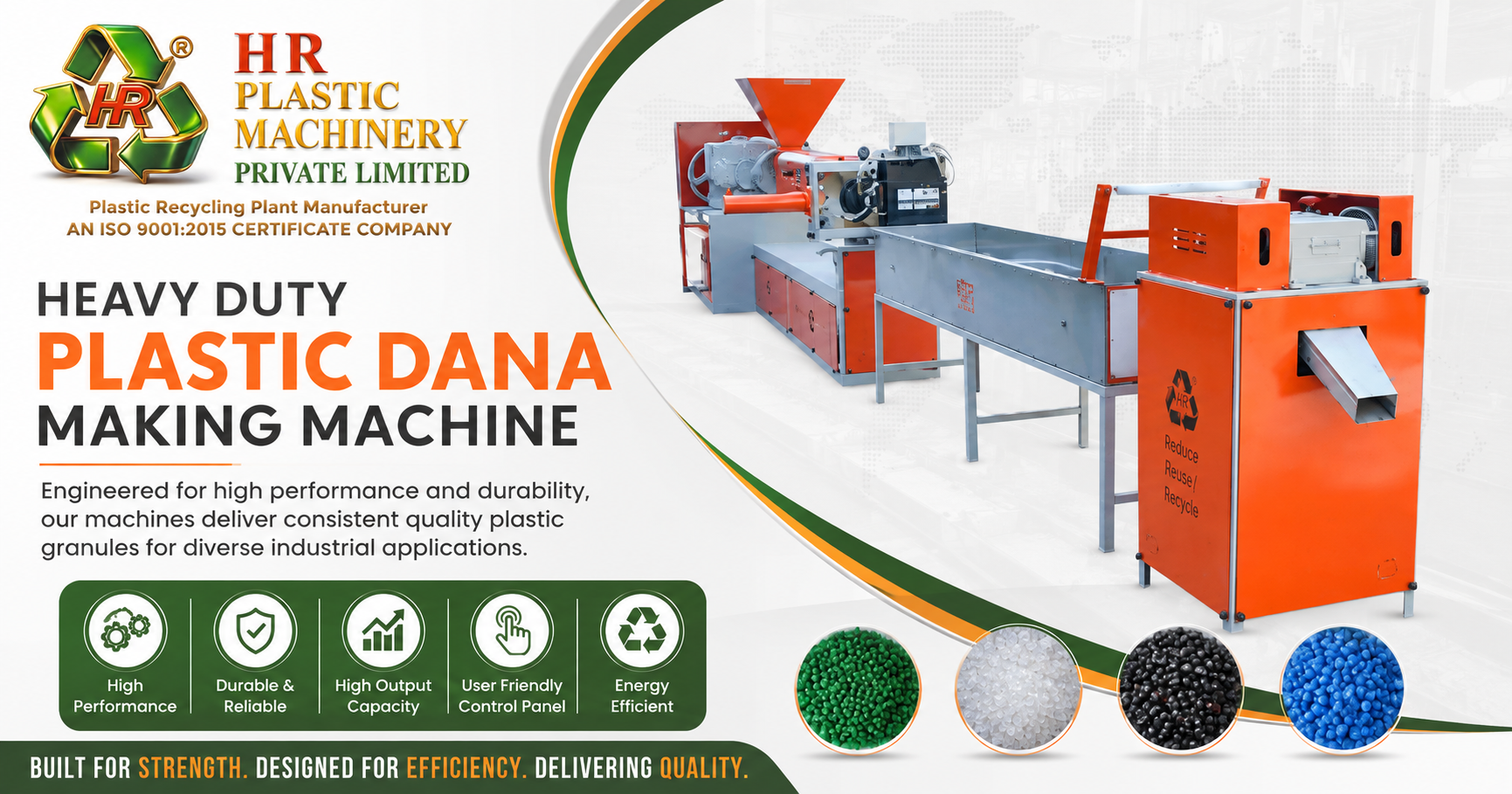
An LDPE Dana Machine converts LDPE film scrap (carry bags, liners, packaging waste) into high-quality pellets (dana) suitable for film blowing, extrusion, and molding. A well-engineered line integrates shredding/agglomeration, extruder with degassing and filtration, pelletizing, and drying—delivering stable MFI, gloss, and mechanical strength. Choose capacity, screw L/D, filtration fineness, and degassing based on contamination and output quality targets.
Working Principle and Process Flow of LDPE Dana Machine
Typical LDPE granulation follows: sorting → size reduction/agglomeration → melting & plasticizing in a single/vented extruder → screen filtration (manual/automatic) → die-face or strand pelletizing → cooling & drying → silo/bagging. VFD-driven feeders stabilize throughput; vacuum/dual vent removes moisture & volatiles; multi-zone heating ensures uniform melt. Maintain stable pressure before screen changer for consistent pellet shape and minimal gels.
Types of LDPE Dana Machines
- Compact startup lines (120–250 kg/hr) with integrated agglomerator and single vent extruder for low–moderate contamination films.
- Medium output systems (300–600 kg/hr) featuring forced feeding, dual vent, and auto screen changer for continuous production.
- High-throughput twin-line plants (700–1200+ kg/hr) with die-face hot cutting for uniform micro-pellets and reduced dust.
- De-ink & wash-ready configurations for printed films with hot wash, friction washer, and centrifugal dryer upstream.
- Odour-control & deodorization packages combining deep vacuum, reactive additives, and optimized residence time.
Key Features and Specifications
- Hardened screw & barrel (nitrided/bimetallic), L/D 28–36 with optimized compression ratio for LDPE films.
- Dual vacuum degassing, melt pressure/temperature sensors, and recipe-based PLC for repeatable quality.
- Automatic screen changer (80–200 mesh) to control black specs and gels without frequent stops.
- Die-face hot cutting or strand pelletizer with air/water cooling and efficient pellet dewatering.
- Energy-efficient motors with VFDs; documented kWh/kg and throughput metrics for cost benchmarking.
Applications of LDPE Dana
- Film blowing for liners, shopping bags, garbage bags, and agriculture mulch with controlled MFI and haze.
- Extrusion of LDPE sheets/laminates for packaging, surface protection, and adhesive carry layers.
- Cable jacketing blends and soft extrusion profiles where flexibility and crack resistance are critical.
- Compound manufacturing with slip, antiblock, and color masterbatches for consistent downstream processing.
Benefits of a Quality LDPE Dana Machine
- Consistent pellet quality—uniform MFI, low gels/contamination—reducing film breaks and rejects.
- Lower operating cost via optimized kWh/kg, automated filtration, and minimized changeover downtime.
- Improved ESG/EPR compliance through recycling of post-consumer/post-industrial films with traceability.
- Scalable design with bolt-on feeders, degassing, and pelletizing upgrades as scrap quality changes.
Manufacturers & Suppliers in India
Indian OEMs provide LDPE pelletizing lines with local spares and service. Evaluate screw metallurgy, vacuum performance, screen-changer response, pelletizer design, and controls (PLC/SCADA). Ask for FAT reports on throughput, kWh/kg, mesh retention, and gel count. Consider additive dosing, odor mitigation, and water-recycling modules for consistent film-grade output.
Maintenance and Safety Tips
- Inspect screens, heaters, thermocouples, and vacuum seals daily; log melt pressure and motor load trends.
- Keep feedstock clean and dry; segregate films by color/ink; maintain desiccant dryers where needed.
- Calibrate load cells and dosing units; verify pelletizer blade clearance and water temperature settings.
- Follow LOTO procedures around hot zones and rotating parts; shield operators from strands and knives.
- Stock critical spares—heaters, sensor cables, screens, blades—and store them labeled in dry conditions.
FAQs – LDPE Dana Machine
1. What capacity should I choose for LDPE films?
+
Match capacity to stable scrap inflow and film grade targets. For mixed, printed films, prefer dual vent extruder and auto screen changer to maintain throughput and quality.
2. Die-face hot cutting vs strand pelletizing—what’s better?
+
Die-face hot cutting gives uniform pellets, low dust, and easier automation. Strand systems are economical and simple to maintain but need careful water/air drying control.
3. How do I control odour in recycled LDPE?
+
Use deep vacuum degassing, adequate residence time, optimized temperature profile, and deodorizing additives. Pre-wash & dry feeds thoroughly to remove contaminants.
4. What mesh size is ideal for film-grade pellets?
+
Typically 120–200 mesh with automatic screen changers to minimize gels for thin film applications. Validate by gel count tests on blown film samples.
5. Can the same line process LDPE and LLDPE?
+
Yes. Use recipe control for temperatures, screw speeds, and filtration. Keep separate scrap streams to maintain consistent MFI and mechanical properties.
Contact Details
Talk to our specialists today for tailored solutions and fast assistance.
Company: Hr Plastic India
Phone: +91 95102-05025
WhatsApp: Chat on WhatsApp
Email: [email protected]
Website: www.hrplasticindia.com
Address: Office Address :- 3, Abhishree Industrial Park, B/h. G.V.M.M., Near Odhav Circle, Ahmedabad-382415.
Recent Posts