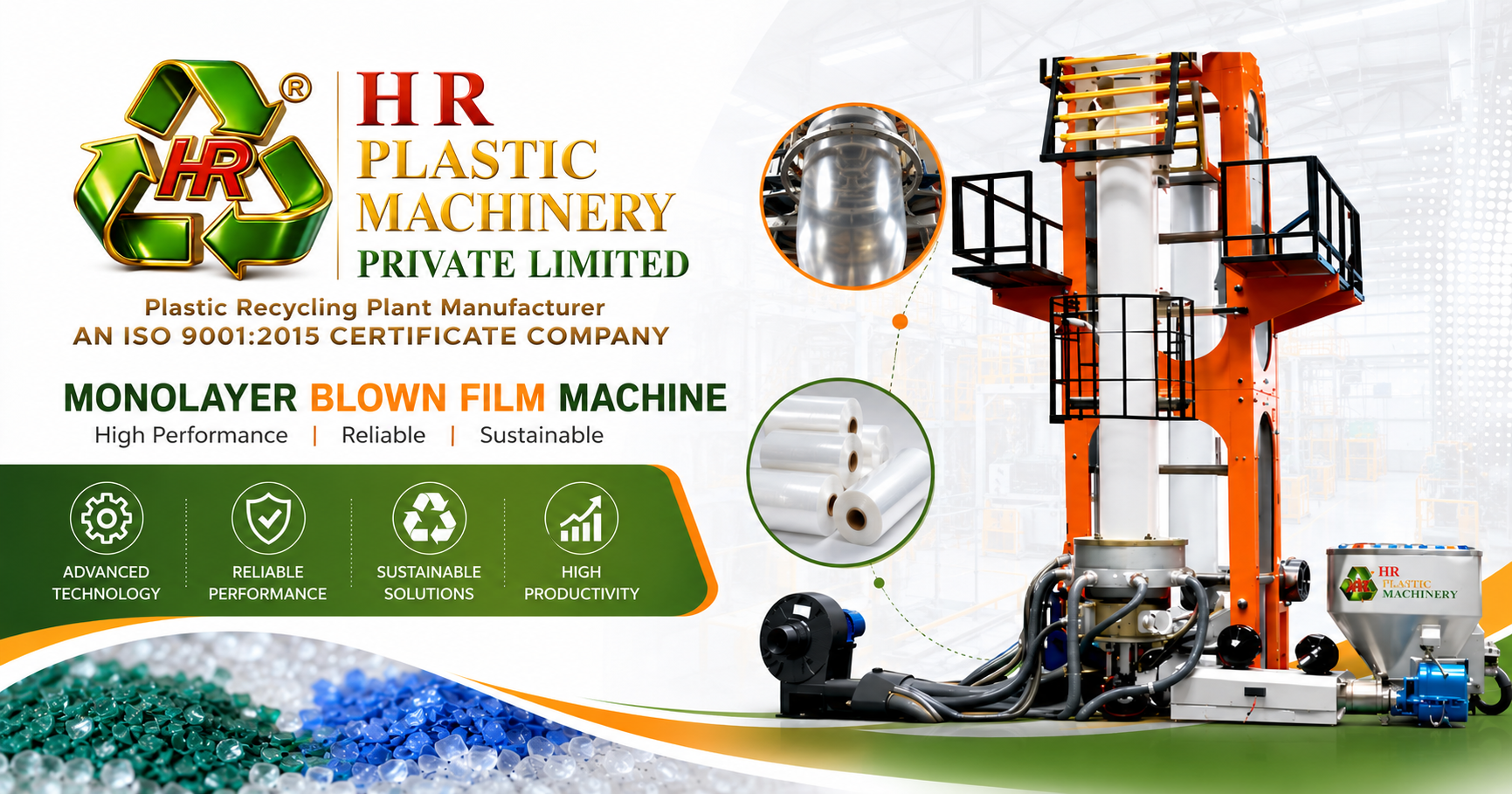
H.R. PLASTIC MACHINERY PVT. LTD.
Mother–Baby Recycling Plant (Extruder Line)

Mother–Baby Recycling Plant (Extruder Line)
Mother Baby Recycling Plant | Mother–Baby Extruder Line in India
```
```
Mother–Baby Recycling Plant (Extruder Line)
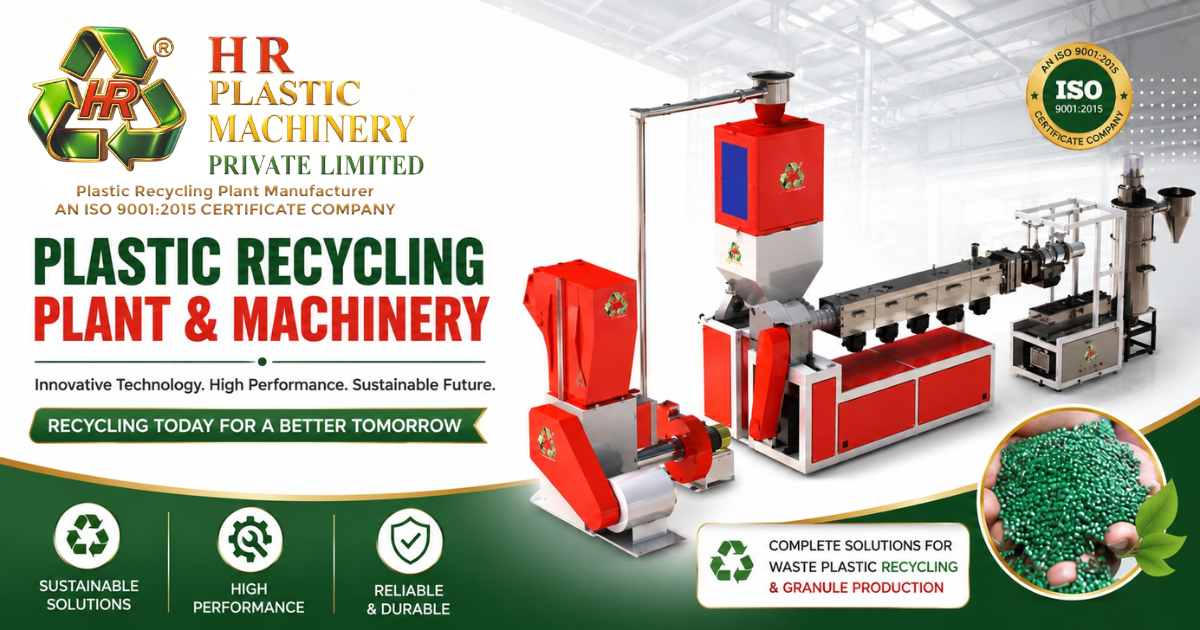
A Mother–Baby Recycling Plant is a two-stage extrusion system purpose-built for processing post-consumer and post-industrial plastics into uniform, high-quality granules. The mother extruder aggressively handles contaminated, fluffy or printed inputs with intensive degassing and robust filtration, while the baby extruder polishes the melt for consistent pellet shape and MFI—ideal for LDPE/LLDPE films, PP woven waste, HDPE blow moulding scrap and mixed flexible streams common in India. For layouts, videos and specifications, explore product details at HR Plastic India.
Working Principle & Process Flow
Material passes through conveying/agglomeration into the mother extruder where primary melting, venting and fine/continuous filtration occur. A melt pump transfers homogenized polymer to the baby extruder that stabilizes pressure, removes residual volatiles via vacuum, and feeds a die-face or strand pelletizer. This staged approach isolates heavy filtration loads upstream, allowing the second stage to run at optimal screw L/D and compression for stable pellets, tighter MFI tolerance and reduced gels. Integrate SCADA for recipe control, alarms and production reports.
Types & Configurations
- Film/Flexibles Mother–Baby: Agglomerator + vented mother extruder, dual-piston/auto screen changer, gear-pump + baby extruder, die-face cutter for thin film regrind.
- Rigid HDPE/PP Lines: Crusher + hot wash (optional) + intensive filtration; strand water bath + pelletizer targeted at drums, crates, and caps.
- High-Degassing rPP/rPE: Multi-vent screws with vacuum domes, high-surface vent ports for printed or high-ink streams to cut odour and volatiles.
- Odour-Control Packages: Long L/D + twin vacuum + reactive additives dosing to minimize organics and achieve stable downstream film quality.
- Throughput Bands: Modular systems from 150–300 kg/h (decentralized) to 600–1500+ kg/h (centralized) with parallel line options for redundancy.
Key Features & Specifications
- Automatic screen changers (dual piston/continuous) + melt pumps for constant pressure and fewer black specs.
- Multi-zone heating, vacuum degassing on both stages, and high-torque gearboxes for stable output.
- Energy-efficient motors with VFDs; documented kWh/kg for payback analysis and audits.
- SS304 contact parts for wash sections; optional hot wash + friction washer for higher purity streams.
- PLC-SCADA with recipe control, alarm logs, PM prompts and remote diagnostics.
Applications
- Film Reprocessors: Convert post-consumer LDPE/LLDPE carry bags, liners and stretch films into pellets for blown film and extrusion coating blends.
- Woven Sack & Raffia: Reprocess PP woven waste and fabric trims for injection/pipe compounds with controlled MFI and colour.
- HDPE Blow Moulding: Turn can, drum and cap scrap into granules for crates, pallets and non-pressure pipe.
- Brand/EPR Programs: Close the loop with traceable rPE/rPP output that supports CPCB/EPR documentation and ESG targets.
Benefits of Mother–Baby Recycling Plants
- Higher pellet quality: Two-stage melt conditioning = better shape, fewer fisheyes, consistent MFI.
- Lower downtime: Heavy filtration handled by mother stage; baby stage runs cleaner and longer.
- Wider feed tolerance: Handles fluffy, printed, and moderately contaminated inputs with improved venting.
- Optimized OPEX: Stable pressure reduces energy spikes; continuous screen change cuts waste and labour.
- Scalable & serviceable: Bolt-on capacity upgrades, standardized spares and pan-India support.
Manufacturers & Suppliers in India
When selecting a Mother–Baby Extruder Line, compare screw design (L/D, compression ratio, vent geometry), filtration area and mesh, vacuum efficiency, degassing dome design, and pelletizing method (strand vs die-face) against your feedstock. Expect deliverables like layout drawings, utilities list, installation/commissioning, operator training, spares kit and performance guarantees tied to throughput and contamination. For guidance and quotations, visit www.hrplasticindia.com.
Maintenance & Safety Tips
- Track melt pressure, amps and vacuum levels; investigate deviations to prevent gels and strand breakage.
- Schedule screen changes proactively; keep mesh history to correlate with feed contamination.
- Calibrate temperature zones and load cells; verify pellet MFI and bulk density batch-wise.
- Implement lockout-tagout; use heat-resistant PPE near die face, cutters and hot strands.
- Stock critical spares: heaters, TCs, breaker plates, seals, blades, gear-pump components.
FAQs – Mother–Baby Recycling Plant
1. When should I choose a mother–baby line over a single extruder?
+
Choose two-stage when feeds are fluffy, printed, or smellier, or when you need tighter pellet specs for film. The first stage bears filtration/degassing load so the second can run stable and clean.
2. What throughput can I expect?
+
Typical bands are 150–300 kg/h (compact), 400–800 kg/h (mid), and 1000–1500+ kg/h (high). Actual output depends on moisture, contamination, melt index and mesh size.
3. Which pelletizer should I pick—strand or die-face?
+
Die-face suits films and low-viscosity streams for uniform micro-pellets; strand is robust for rigid feeds and colour masterbatch. Choose based on downstream application and cleaning preference.
4. How do I control odour?
+
Use twin-vent screws, strong vacuum pumps, longer L/D on mother stage, and optional reactive additives. Maintain hot-wash quality for printed/food-contact feeds to reduce VOCs.
5. What utilities are required?
+
Three-phase power, process/cooling water (for strand or die-face), compressed air and ventilation. Add ETP/water-recycling if washing is integrated.
Contact Details
Talk to our specialists today for tailored solutions and fast assistance.
Company: Hr Plastic India
Phone: +91 95102-05025
WhatsApp: Chat on WhatsApp
Email: [email protected]
Website: www.hrplasticindia.com
Address: Office Address :- 3, Abhishree Industrial Park, B/h. G.V.M.M., Near Odhav Circle, Ahmedabad-382415.
Recent Posts