H.R. PLASTIC MACHINERY PVT. LTD.
Mother–Baby Recycling Plant Supplier

Mother–Baby Recycling Plant Supplier
Mother Baby Recycling Plant Supplier in India | Two-Stage Plastic Recycling Experts
```
```
Mother–Baby Recycling Plant Supplier
A mother–baby (two-stage) recycling plant combines a robust primary extruder (mother) for intensive plastic melt filtration with a secondary extruder (baby) that stabilises the melt, removes residual gases/odour, and pelletizes consistently. It is ideal for post-consumer LDPE/LLDPE films, HM-HDPE carry bags, PP woven-sack edge trims, and multi-layer packaging waste. When selecting a supplier, evaluate throughput (kgh), filtration area, venting design, energy (kWh/kg), water ring vs die-face cutting, and after-sales coverage for Indian operating conditions.
Working Principle and Process Flow of Mother–Baby Plants
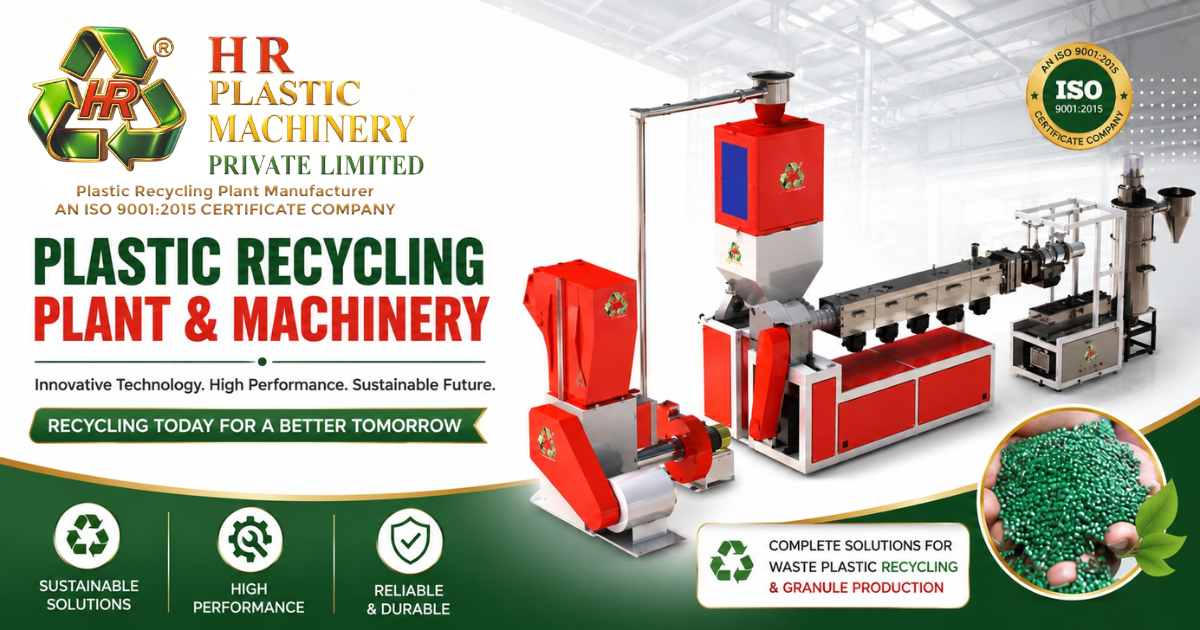
Material is inspected, shredded/agglomerated, and fed to the mother extruder for the first melt filtration. High-contamination streams are processed through breaker plates or continuous screen changers. The melt transfers to the baby extruder for secondary filtration and deep vacuum degassing, then cut by water-ring/strand/die-face pelletizers. Recipe-driven PLC control maintains temperature, pressure, and MFI. Learn more about configurations and audits on hrplasticindia.com.
Mother–Baby Plant Types Suppliers Offer
- Entry two-stage lines: 150–300 kg/hr for LDPE/LLDPE film scrap with basic vacuum and manual screen change.
- Mid-range 400–800 kg/hr systems featuring hydraulic/automatic screen changers, twin vent, and water-ring pelletizers.
- High-throughput 900–1500+ kg/hr lines with continuous screen change, double-stage degassing, and die-face cutting for heavy ink/contamination.
- PET/rigid variants integrating intensive filtration, crystallisation, and IV retention modules for textile/strapping feedstock.
- Odour-controlled modules with deodorising vents, high-vac pumps, and tailored screw profiles for printed multi-layer film waste.
Key Features and Specifications
- Two-stage melt filtration with large effective screen area to reduce gels, black specks, and paper/ink fines.
- Deep vacuum degassing on the baby extruder for odour reduction and stable MFI across batches.
- Water-ring, strand, or die-face pelletizing options matched to polymer, throughput, and operator skill levels.
- Energy-efficient drives and VFDs, documented kWh/kg benchmarks, and heat-zone optimisation for lower OPEX.
- PLC/SCADA with recipe control, alarm history, predictive maintenance prompts, and remote diagnostics.
Applications of Mother–Baby Recycling Plants
- LDPE/LLDPE film reprocessing for carry bags, liners, agricultural films, and shrink/stretch wraps.
- HM-HDPE films and printed multi-layer packaging with adhesive/ink residues requiring deeper filtration.
- PP raffia/woven sack, FIBC trims, and non-woven PP for injection/film grade recycled pellets.
- Post-consumer mixed film bales from MRFs where first-stage filtration stabilises high dirt content.
Benefits of Partnering with a Mother–Baby Plant Supplier
- Cleaner pellets and fewer downstream defects due to staged filtration and effective degassing.
- Higher uptime from automatic screen change, optimised conveying, and standardised spares.
- Predictable processing cost with measured kWh/kg, reduced regrind waste, and stable MFI.
- Better compliance/traceability via SCADA logs, safety guarding, and EPR-aligned documentation.
Manufacturers & Suppliers in India
Indian suppliers provide complete two-stage plants from layout to commissioning, operator training, and AMCs. Typical options include SS304 wetted parts for wash sections, high-vacuum packages, continuous screen changers, and odour-control kits. Compare screw/barrel metallurgy, filtration area, pelletizer choice, and documented trials on your scrap mix. Verify FAT reports, throughput guarantees, and after-sales response commitments across Ahmedabad, Mumbai, Delhi-NCR, Coimbatore, and Hyderabad.
Maintenance and Safety Tips
- Track melt pressure/temperature per zone; investigate spikes indicating dirty screens or blocked vents.
- Replace seals, heaters, and thermocouples per schedule; retain labelled spares to reduce downtime.
- Clean pelletizer die and water system; maintain chill tank chemistry to prevent scaling and fines.
- Audit vacuum performance weekly; check pump oil, gaskets, and leaks impacting odour removal.
- Train operators on lockout-tagout and hot-surface hazards; test emergency stops and interlocks regularly.
FAQs – Mother–Baby Recycling Plant
1. Which polymers are best suited for two-stage lines?
+
LDPE/LLDPE films, HM-HDPE film waste, PP raffia/non-wovens, and printed multi-layer films benefit most from two-stage filtration and degassing.
2. How do I decide between water-ring, strand, and die-face pelletizers?
+
Water-ring is versatile and operator-friendly; strand suits lower contamination and simple maintenance; die-face supports high throughputs and sticky melts. Match to polymer, kgh, and labour skills.
3. What filtration rating should I target?
+
Start with 80–120 mesh on the mother stage and finer on the baby stage where needed. Validate by downstream quality tests (gels, black specks, tensile/impact, and MFI stability).
4. Can the same line handle printed and unprinted films?
+
Yes, with recipe changes, appropriate screen packs, and strong vacuum. For heavy inks/adhesives, choose continuous screen change and upgraded venting.
5. What documentation should a supplier provide?
+
PIDs, GA layouts, electrical drawings, FAT reports, performance guarantees (kgh, kWh/kg), safety declarations, spares lists, and preventive maintenance schedules.
Contact Details
Talk to our specialists today for tailored solutions and fast assistance.
Company: Hr Plastic India
Phone: +91 95102-05025
WhatsApp: Chat on WhatsApp
Email: [email protected]
Website: www.hrplasticindia.com
Address: Office Address :- 3, Abhishree Industrial Park, B/h. G.V.M.M., Near Odhav Circle, Ahmedabad-382415.
Recent Posts