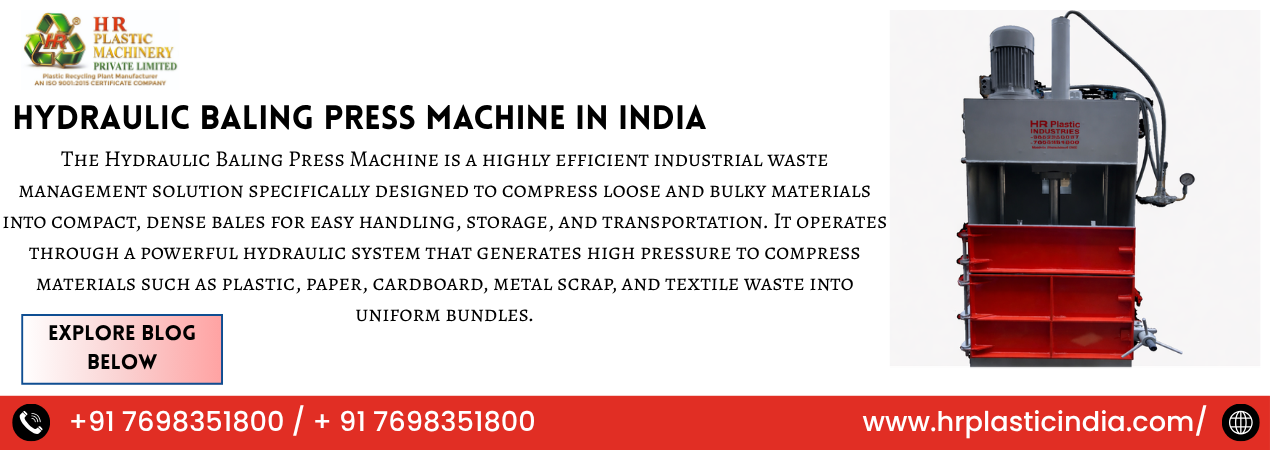
Hydraulic Baling Press Machine in India
Hydraulic Baling Press
Machine in India
An important industrial solution for businesses that handle bulky waste, recyclable materials, scrap, packaging waste, and production leftovers.
Hydraulic Baling Press Machine in India
A Hydraulic Baling Press Machine in India is an important industrial solution for businesses that handle bulky waste, recyclable materials, scrap, packaging waste, and production leftovers. In industries where loose materials occupy large storage space and create handling challenges, a baling press helps compress them into compact, manageable bales. This improves storage efficiency, transportation convenience, workplace cleanliness, and the overall recycling workflow.
H.R. Plastic Industries Private Limited is involved in plastic processing machinery, recycling machinery, fabrication solutions, and industrial equipment manufacturing. The company works with machinery used in plastic recycling, dana making, grinding, agglomeration, washing, extrusion, dust removal, hydraulic systems, shredding, and related industrial applications. With facilities in Ahmedabad and experience in industrial machine manufacturing, the company provides practical equipment for recycling plants, manufacturing units, packaging industries, warehouses, and waste handling operations.
The Hydraulic Baling Press Machine is designed to compress loose and bulky materials such as plastic waste, paper, cardboard, textile waste, metal scrap, packaging waste, and recyclable industrial materials. It uses hydraulic pressure to form dense and uniform bales, making waste easier to store, shift, load, and transport. For companies looking for a reliable baling solution in India, understanding the machine's function, applications, features, and selection factors is important before making a purchase decision.
What Is a Hydraulic Baling Press Machine?
A Hydraulic Baling Press Machine is an industrial compression machine that uses hydraulic force to press loose materials into compact blocks or bundles called bales. These bales are easier to handle than loose waste because they reduce volume and improve material organization. The machine is widely used in recycling plants, scrap yards, warehouses, packaging units, manufacturing factories, municipal waste management units, and plastic processing industries.
The basic working principle is simple. Material is placed inside the pressing chamber, and the hydraulic system applies controlled pressure through a pressing plate. This pressure compresses the material into a dense form. Once the bale is formed, it can be tied, removed, stored, or transported for further processing. The process reduces material bulk and helps industries manage waste more efficiently.
In India, where recycling, packaging, plastic processing, logistics, and manufacturing sectors are expanding, hydraulic baling press machines are becoming increasingly useful. They support organized waste handling and reduce the challenges caused by scattered, loose, and high-volume materials.
Importance in Indian Industries
Industrial waste management is not only about disposal. It also includes sorting, compressing, storing, transporting, and reusing materials efficiently. Many factories generate large quantities of plastic film, cardboard boxes, paper waste, fabric cuttings, packaging material, and scrap. When this waste remains loose, it occupies unnecessary floor space and increases labour effort.
A hydraulic baling press helps solve this problem by converting loose waste into compact bales. This improves material flow inside the factory or warehouse and makes it easier to send recyclable materials to processing units. For businesses dealing with plastic recycling, paper recycling, textile waste, scrap management, or packaging waste, this machine becomes a valuable part of daily operations.
In India, industries are also becoming more aware of cleaner production spaces and sustainable waste handling. A baling press supports these needs by reducing clutter, improving storage discipline, and helping recyclable materials move smoothly through the waste management chain.
How Hydraulic Baling Press Machine Works
The working process of a hydraulic baling press is based on controlled compression. The machine uses hydraulic oil, cylinders, pumps, valves, and a pressing mechanism to generate strong force. This force compresses waste material into a compact bale inside the chamber.
The process usually includes these steps:
The machine may be manually operated, semi-automatic, or automatic depending on its design and industrial requirement. Manual systems are suitable for controlled production environments, while automatic systems are useful where regular and higher-volume baling is needed. The right option depends on material type, daily output, labour availability, and space conditions.
Key Features of Hydraulic Baling Press Machine
A good hydraulic baling press machine should be designed for strength, safety, performance, and long-term industrial use. Since it handles heavy compression work, construction quality and hydraulic performance are very important.
Common features include:
- Heavy-duty hydraulic system for strong compression force
- Strong mild steel body structure for durability
- Uniform bale formation for easy stacking and handling
- Manual or automatic operating options
- Low power usage with efficient output
- Safety locking arrangement for operator protection
- Suitable design for continuous industrial usage
- Compact structure for easier installation in factories and warehouses
These features help industries manage waste with better control. A stable machine also reduces downtime and improves daily productivity. For recycling and manufacturing businesses, consistent bale quality is important because it affects storage, loading, transportation, and further processing.
Technical Understanding of Hydraulic Baling Press Models
Hydraulic baling press machines are available in different capacities and categories based on industrial use. H.R. Plastic Industries offers models such as HRPIBP-15, HRPIBP-30, HRPIBP-45, and HRPIBP-60. These models are suitable for standard baling and heavy-duty baling applications depending on operational needs.
Standard baling models are useful for moderate waste handling, packaging waste, plastic material, paper, cardboard, and general recyclable materials. Heavy-duty baling models are suitable for industries that deal with larger volumes, denser materials, or continuous baling requirements. Choosing the right model depends on the type of material, bale size requirement, production frequency, available space, and handling method.
Before selecting a machine, businesses should evaluate how much material they need to compress daily and what kind of bale density is required. A machine that is too small may slow down operations, while an oversized machine may not be practical for limited space or lower material volume.
Applications of Hydraulic Baling Press Machine
Hydraulic baling press machines are used across many industrial and recycling sectors. Their main purpose is to reduce material volume and improve handling efficiency.
Major applications include:
- Plastic waste recycling industries
- Paper and cardboard baling units
- Scrap handling and metal recycling
- Textile and fabric waste compression
- Packaging industry waste management
- Warehouses and logistics centers
- Municipal waste management plants
- Industrial manufacturing units
In plastic recycling industries, the machine helps compress plastic films, plastic scrap, bottles, and packaging material before further processing. In paper and cardboard units, it forms compact bales that are easier to move and store. In warehouses and logistics centers, it helps manage packaging waste generated from cartons, wrapping material, and shipping operations.
Hydraulic Baling Press Machine for Plastic Waste Recycling
Plastic waste recycling requires proper collection, sorting, handling, and processing. Loose plastic waste is lightweight but bulky, making it difficult to store and transport. A hydraulic baling press machine helps compress plastic material into compact bales before it moves to recycling stages such as shredding, washing, grinding, agglomeration, or extrusion.
For plastic recycling companies in India, this machine supports a better workflow. It reduces the space required for storing plastic waste and helps maintain cleaner work areas. It also makes material movement easier within the plant. Since H.R. Plastic Industries works with plastic recycling machinery, dana making machines, grinders, agglomerators, washing plants, extruders, and related equipment, the hydraulic baling press fits naturally into the waste handling and recycling process.
Hydraulic Baling Press Machine for Paper and Cardboard Waste
Paper and cardboard waste are commonly generated in packaging units, warehouses, printing units, retail distribution centers, logistics companies, and manufacturing facilities. Loose cardboard cartons and paper waste can occupy large storage areas and create workplace clutter. A hydraulic baling press compresses these materials into neat bales that are easier to stack and transport.
For businesses that regularly handle carton waste, a baling press can improve housekeeping and material recovery. It also helps recycling vendors receive material in a more organized form. Since paper and cardboard are highly recyclable, compact baling supports better collection and reuse.
Benefits of Using Hydraulic Baling Press Machine
The main benefit of a hydraulic baling press is volume reduction. When bulky material is compressed into compact bales, industries can use available space more effectively. This is especially important in factories and warehouses where floor space directly affects workflow and storage capacity.
Important benefits include:
- Reduces storage space required for loose waste
- Improves material handling and movement
- Supports cleaner and safer workplace conditions
- Helps reduce manual handling effort
- Makes transportation more organized
- Improves recycling process efficiency
- Forms uniform bales for easy stacking
- Suitable for multiple waste and scrap materials
The machine also helps reduce unnecessary material scattering. In industries where waste is generated daily, organized baling improves discipline and reduces operational inconvenience.
Buyer Checklist for Hydraulic Baling Press Machine in India
Before choosing a hydraulic baling press machine, buyers should review technical and operational factors carefully. The right machine should match the material type, daily workload, and available installation space.
Important points to check include:
- Type of material to be baled
- Required bale size and bale density
- Machine capacity and compression force
- Manual, semi-automatic, or automatic operation
- Hydraulic system quality and durability
- Body construction and frame strength
- Safety features for operator protection
- Maintenance requirements and service support
- Space available for installation
- Compatibility with existing recycling workflow
A careful selection process helps avoid operational mismatch. It also ensures that the machine delivers useful performance in real working conditions.
Role of H.R. Plastic Industries in Industrial Machinery
H.R. Plastic Industries Private Limited works in the field of plastic processing machinery, recycling machinery, hydraulic systems, and industrial waste management equipment. The company's product range includes dana making machines, automatic recycling plants, two-stage plastic recycling plants, grinder machines, mixture machines, agglomeration machines, dust removers, hydraulic screen changers, screw barrels, washing plants, shredders, blown film machines, dana cutters, and hydraulic baling press machines.
The company is based in Ahmedabad, Gujarat, with industrial addresses at Odhav and near Kuha Gam on the Ahmedabad-Indore Highway. Its machinery is designed for industries involved in plastic recycling, scrap processing, packaging waste handling, and manufacturing operations. For buyers searching for a hydraulic baling press machine in India, the company provides a product category that fits practical industrial waste compression requirements.
Maintenance and Safety Considerations
A hydraulic baling press machine performs high-pressure compression, so maintenance and safe operation are important. Regular checking of hydraulic oil, hoses, cylinders, valves, electrical controls, and mechanical parts helps maintain stable performance. Operators should also follow loading guidelines and avoid overloading the machine beyond its intended capacity.
Safety features such as locking systems, proper operating controls, and a stable machine structure help protect workers during use. Training operators on correct loading, pressing, tying, and bale removal procedures can reduce risks and improve daily efficiency. A clean surrounding area also helps ensure smooth material movement and safer machine operation.
Proper maintenance not only improves machine life but also keeps output consistent. For industries using the machine daily, scheduled inspection is better than waiting for breakdowns.
Why Indian Businesses Need Efficient Waste Baling Solutions
India has a large industrial base across manufacturing, packaging, recycling, plastic processing, textiles, engineering, and logistics. These sectors generate different types of waste materials during production and handling. Without proper compression and storage systems, this waste can slow down operations and increase workplace management challenges.
A hydraulic baling press machine gives industries a practical method to control waste volume. It is useful for small, medium, and large industrial units depending on the model and capacity selected. As recycling awareness and industrial waste management requirements continue to grow, baling machines are becoming more relevant across India.
For businesses in plastic recycling, packaging, warehousing, and manufacturing, the machine is not only used for waste handling but also for improving operational efficiency. It helps create a more organized production environment and supports responsible recycling practices.
A Hydraulic Baling Press Machine in India is a practical and efficient solution for industries that need better waste handling, storage management, and recycling support. By compressing loose materials into compact bales, the machine helps reduce volume, improve workplace organization, simplify transportation, and support sustainable industrial practices.
Frequently Asked Questions
A Hydraulic Baling Press Machine is used to compress loose and bulky materials into compact bales. It is commonly used for plastic waste, paper, cardboard, textile waste, metal scrap, packaging waste, and recyclable industrial materials. The machine helps reduce storage space, improve handling, and make transportation easier.
A hydraulic baling press is important for recycling industries because it organizes loose waste into compact, uniform bales. This makes material easier to store, load, move, and send for further recycling. It also improves plant cleanliness and reduces the effort required for handling bulky waste materials.
A hydraulic baling press can compress plastic waste, paper, cardboard, fabric waste, packaging material, metal scrap, and many other recyclable materials depending on machine design and capacity. Material suitability should be checked based on bale requirements, compression force, and machine category.
To choose the right machine, evaluate the type of material, daily waste volume, bale size, compression force, available space, operating method, safety features, and maintenance support. Standard models are suitable for moderate baling, while heavy-duty models are better for high-volume or tougher industrial applications.
Yes, a hydraulic baling press is suitable for plastic recycling plants because plastic waste is often bulky and difficult to manage in loose form. Compressing plastic waste into bales helps save storage space and improves material movement before shredding, grinding, washing, or extrusion processes.
Yes, regular maintenance is important for smooth performance. Hydraulic oil levels, cylinders, hoses, valves, electrical controls, moving parts, and safety systems should be checked periodically. Proper maintenance helps improve machine life, reduce downtime, and maintain consistent bale quality.
Hydraulic baling press machines are used across India in recycling plants, warehouses, packaging units, plastic processing industries, scrap yards, textile units, logistics centers, municipal waste management plants, and manufacturing facilities. They are useful wherever bulky waste needs organized compression and handling.
Get in Touch
Filter Using Tags
