H.R. PLASTIC MACHINERY PVT. LTD.
Mother Baby Recycling Plant Manufacturer in India
Mother Baby Recycling Plant Manufacturer in India
Recycling Machinery Supplier in India | Trusted Equipment for Waste & Material Recovery
Mother Baby Recycling Plant Manufacturer in India
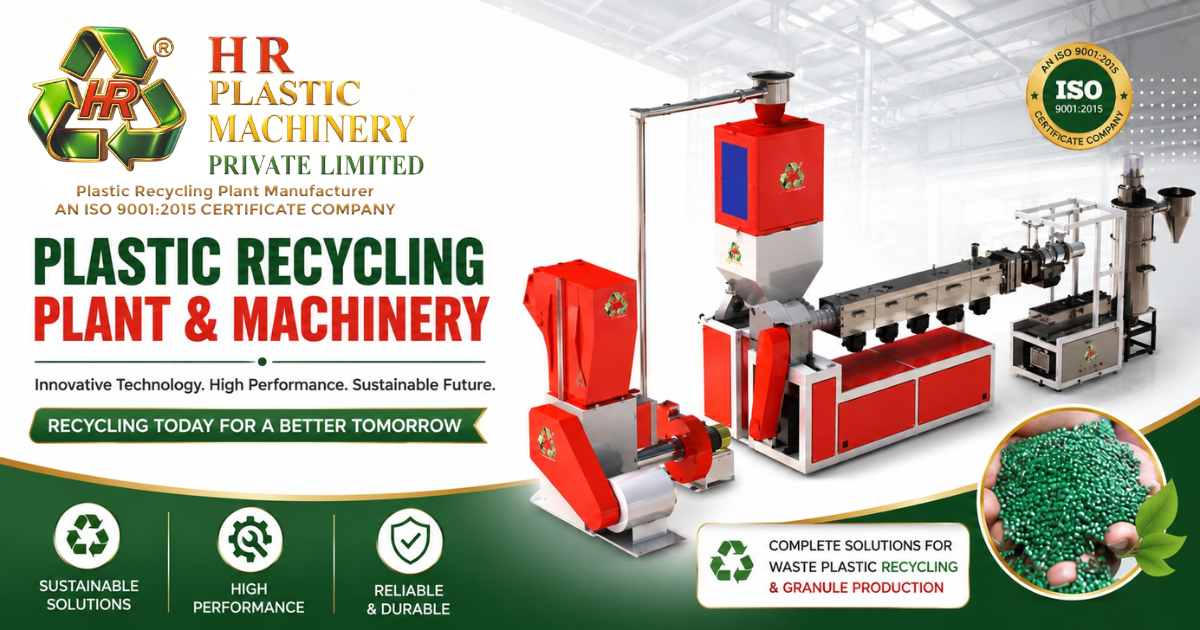
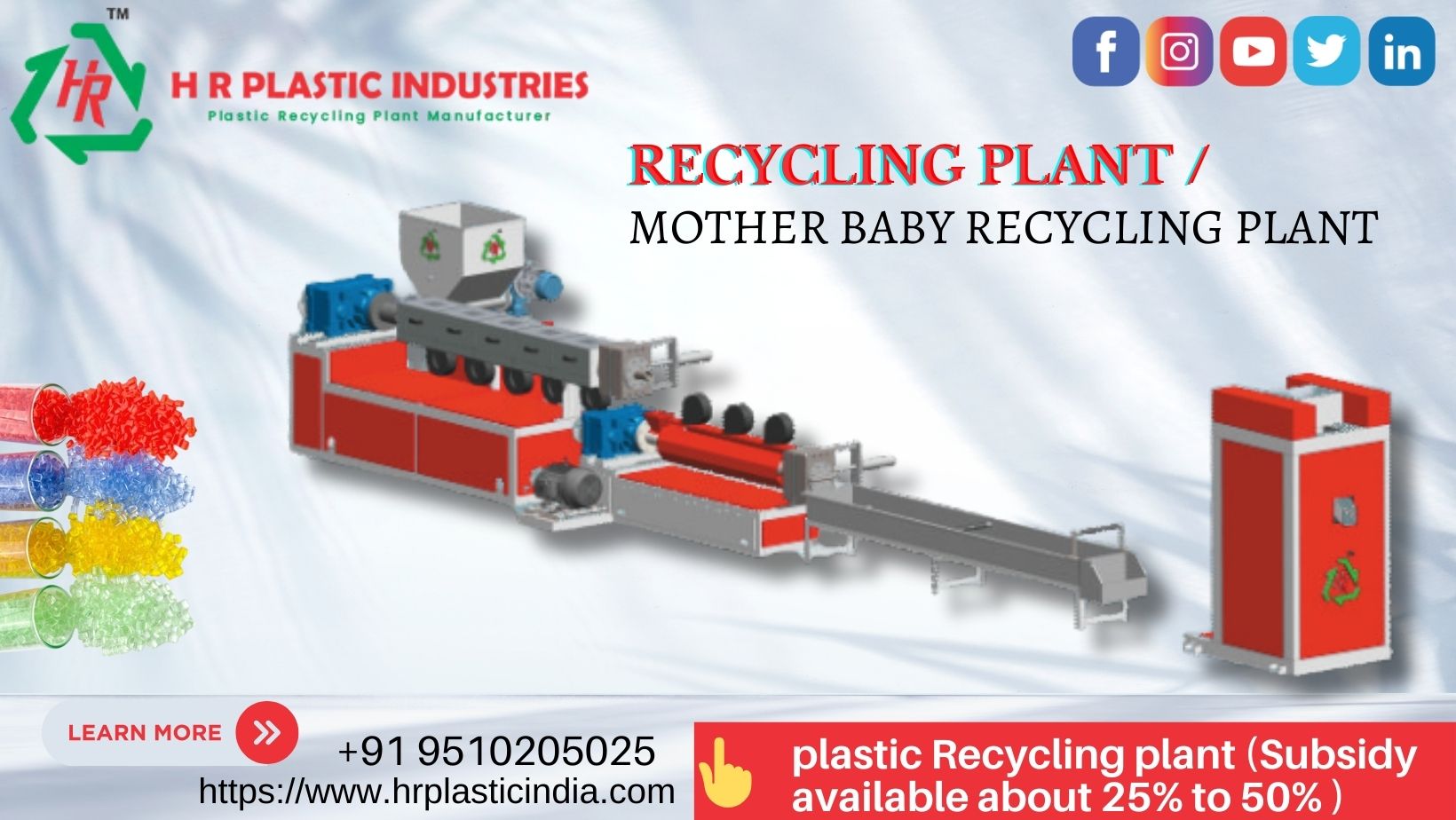
A mother baby recycling plant combines a heavy-duty primary extruder with a secondary baby extruder to convert highly contaminated films, raffia and washed flakes into uniform granules. The mother extruder handles degassing and melt filtration; the baby extruder stabilises the melt and forms pellets with consistent MFI. Indian processors choose this architecture for flexible inputs, higher throughput per kW and lower labour. Evaluate screw L/D, vacuum stages, screen changer area and cutter style before ordering. Explore layouts, utilities and options on hrplasticindia.com.
Working Principle and Process Flow
Material passes through inspection and size reduction, enters the mother extruder with forced feeding or crammer feeder, undergoes multi-stage degassing and screen filtration, then transfers via melt pipe to the baby extruder for pressure stabilisation and pelletising. Die-face hot cutting or strand cutting completes the process. SCADA records kWh/kg, melt temperature and vacuum levels for traceability. For mixed municipal inputs, add density separation, friction washing and centrifugal drying modules ahead of extrusion.
Configurations We Manufacture
- 150–300 kg/hr compact lines with single vacuum and manual screen changer for decentralised aggregators and start-ups.
- 400–700 kg/hr mid-range with twin vacuum, hydraulic screen changer and die-face pelletiser for LDPE/LLDPE films.
- 800–1200 kg/hr high-throughput twin-line systems with continuous back-flush filtration for post-consumer streams.
- PET and PP rigid regrind packages with melt pumps, gear-pump pressure control and crystalliser interface.
- Odour-control option with long-vent screws, high-capacity vacuum and deodorising stack for challenging feedstock.
Key Features and Specifications
- Optimised screw profiles and L/D 36–40 for superior plastication across films, raffia and washed flakes.
- Multi-zone heating, vacuum degassing stages and large-area screen changers for cleaner melt and fewer black specks.
- Die-face hot cutter with automatic pellet length control and air-cooled conveyor or water-ring options.
- VFD-driven motors with documented kWh/kg, load-cell dosing and melt pressure interlocks for safety.
- PLC-SCADA recipe control, alarm history, remote diagnostics and preventive maintenance prompts.
Applications and Accepted Materials
- LDPE and LLDPE carry-bags, liners and stretch film to make recycled film grade granules for packaging.
- HDPE and PP woven sacks, raffia and filament waste converted into injection and extrusion grade pellets.
- Washed mixed films from MRFs, agricultural mulch and post-consumer laminates after de-inking and separation.
- PET bottle flakes blended for strapping, fibre and sheet after upstream hot-wash and IV control.
Why Choose a Mother Baby Plant
- Handles variable contamination with stable pressure and better devolatilisation through two-stage extrusion.
- Higher uptime and fewer changeovers using continuous or back-flush screen changers and robust pelletising.
- Lower operating cost per kg via energy-efficient drives, automated dosing and streamlined conveying.
- Consistent pellet quality meeting MFI, colour and moisture targets for downstream film, sheet and moulding.
Maintenance and Safety Tips
- Inspect screws, barrels, heaters and thermocouples; log vacuum levels, melt pressure and motor loads daily.
- Maintain screen inventory and change as per differential pressure alarms to protect gear-pump and die.
- Clean pelletiser knives, water-ring housing or air-conveyor ducts to avoid fines and off-size pellets.
- Follow lockout-tagout, hot-surface PPE and purge procedures during start-up, material change and shutdown.
- Schedule calibration of load cells, temperature sensors and energy meters for reliable KPI tracking.
FAQs – Mother Baby Recycling Plant
1. What capacity should I select for my feedstock?
+
Match throughput to consistent scrap availability, contamination level and buyer demand. For mixed films, choose larger filtration area and dual vacuum; for clean in-house trims, compact lines offer faster ROI.
2. Which pelletising method is best?
+
Die-face hot cutting suits films and light flakes with stable pellet size; water-ring is versatile for higher outputs; strand cutting is economical for rigid regrinds. Selection depends on polymer, output and cooling water policy.
3. Can the line handle printed and laminated films?
+
Yes, add intensive washing, long-vent screws and high-capacity vacuum. De-inking improves colour; back-flush filtration manages gels and paper fines to achieve acceptable granule clarity.
4. What utilities are required?
+
Three-phase power, chilled or process water for pelletiser, compressed air for valves and cutter, and adequate ventilation for vacuum exhaust. Consider water-recycling and effluent treatment for sustainable operation.
5. How do I ensure consistent MFI and colour?
+
Use recipe control for feed blends, maintain melt temperature within set windows, monitor vacuum levels, and replace screens proactively. Add masterbatch dosing and inline moisture analysis where needed.
Contact Details
Talk to our specialists today for tailored solutions and fast assistance.
Company: Hr Plastic India
Phone: +91 95102-05025
WhatsApp: Chat on WhatsApp
Email: [email protected]
Website: www.hrplasticindia.com
Address: Office Address :- 3, Abhishree Industrial Park, B/h. G.V.M.M., Near Odhav Circle, Ahmedabad-382415.
Recent Posts