H.R. PLASTIC MACHINERY PVT. LTD.
Plastic Pelletizing Machine Supplier
Plastic Pelletizing Machine Supplier
Plastic Pelletizing Machine Supplier
Best Description:
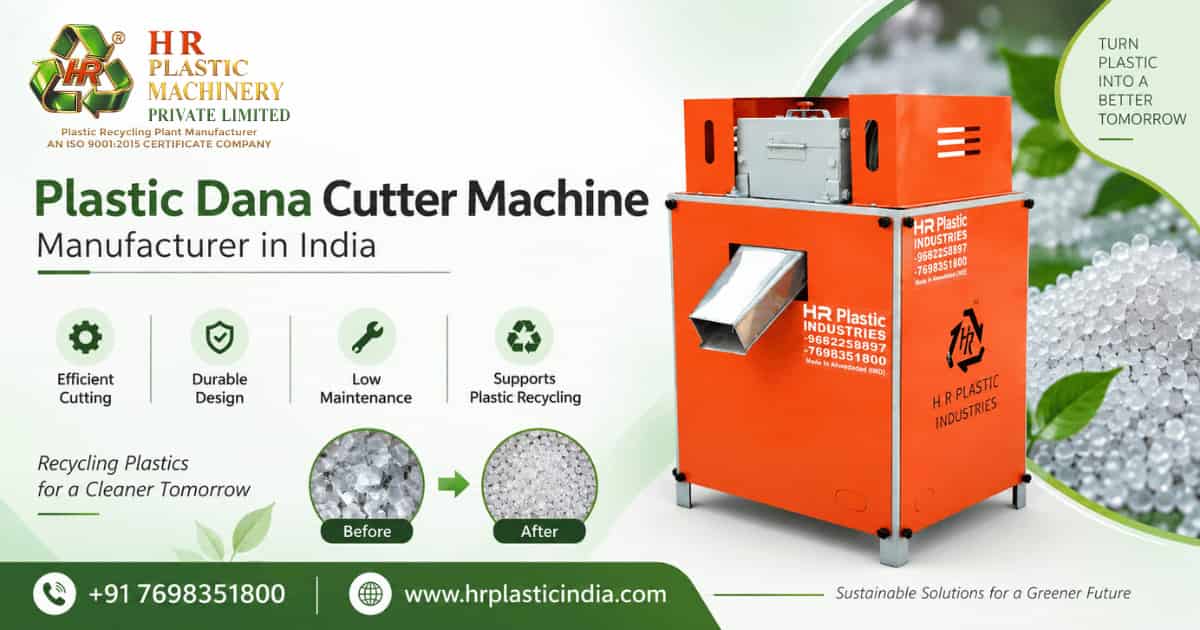
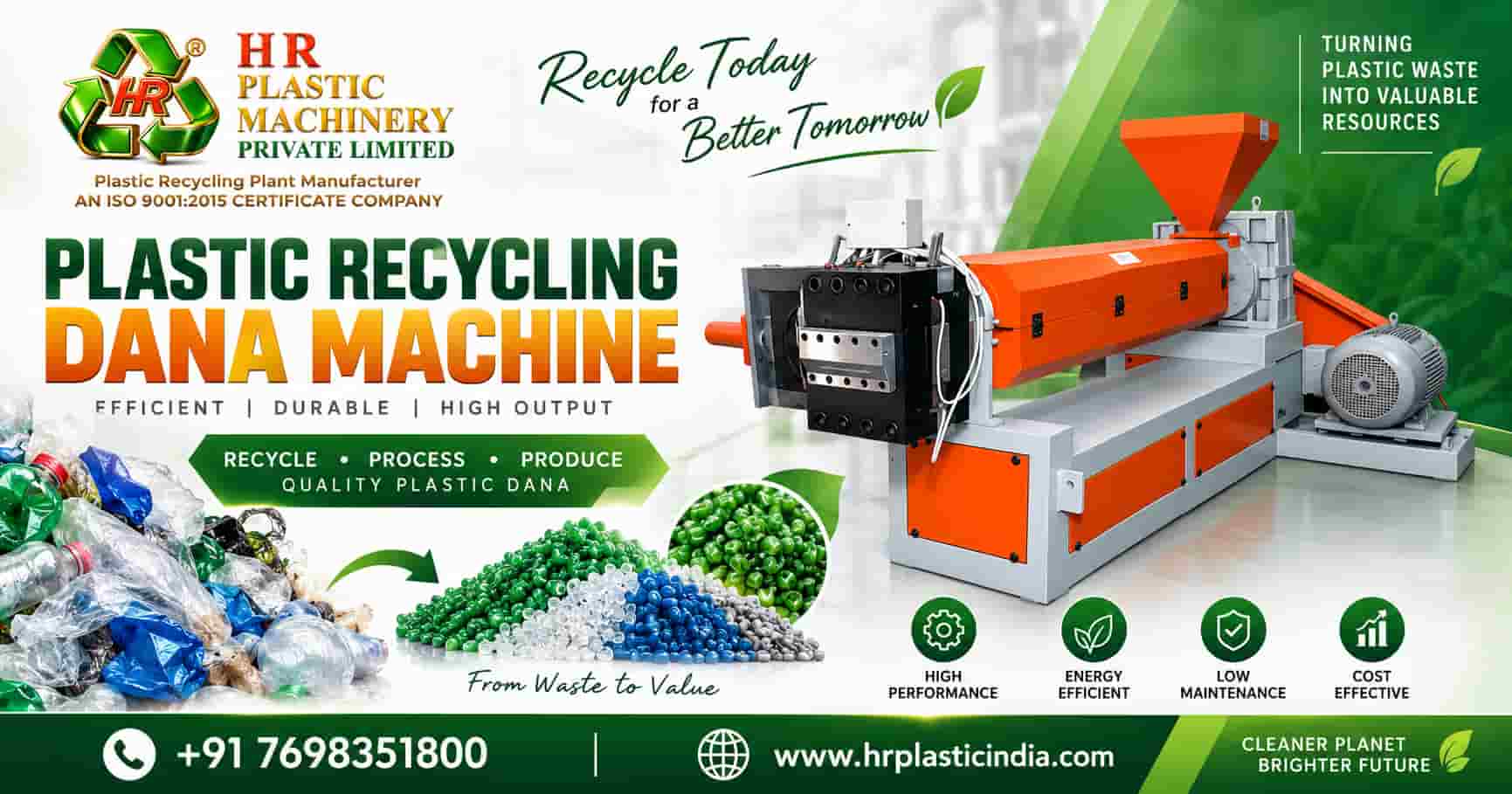
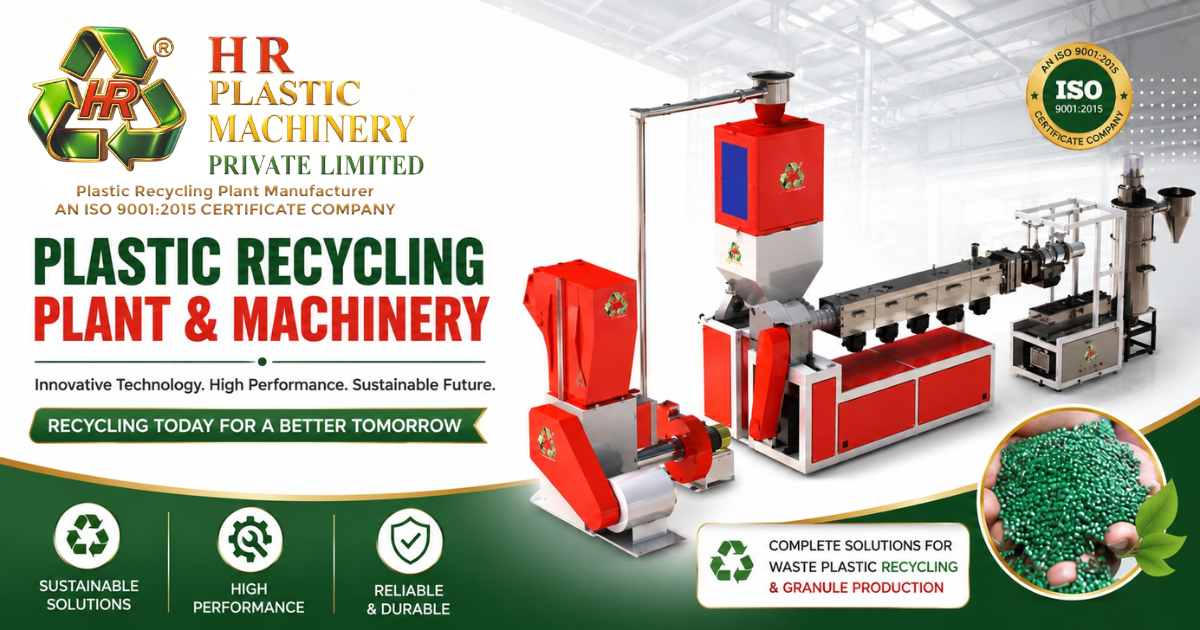
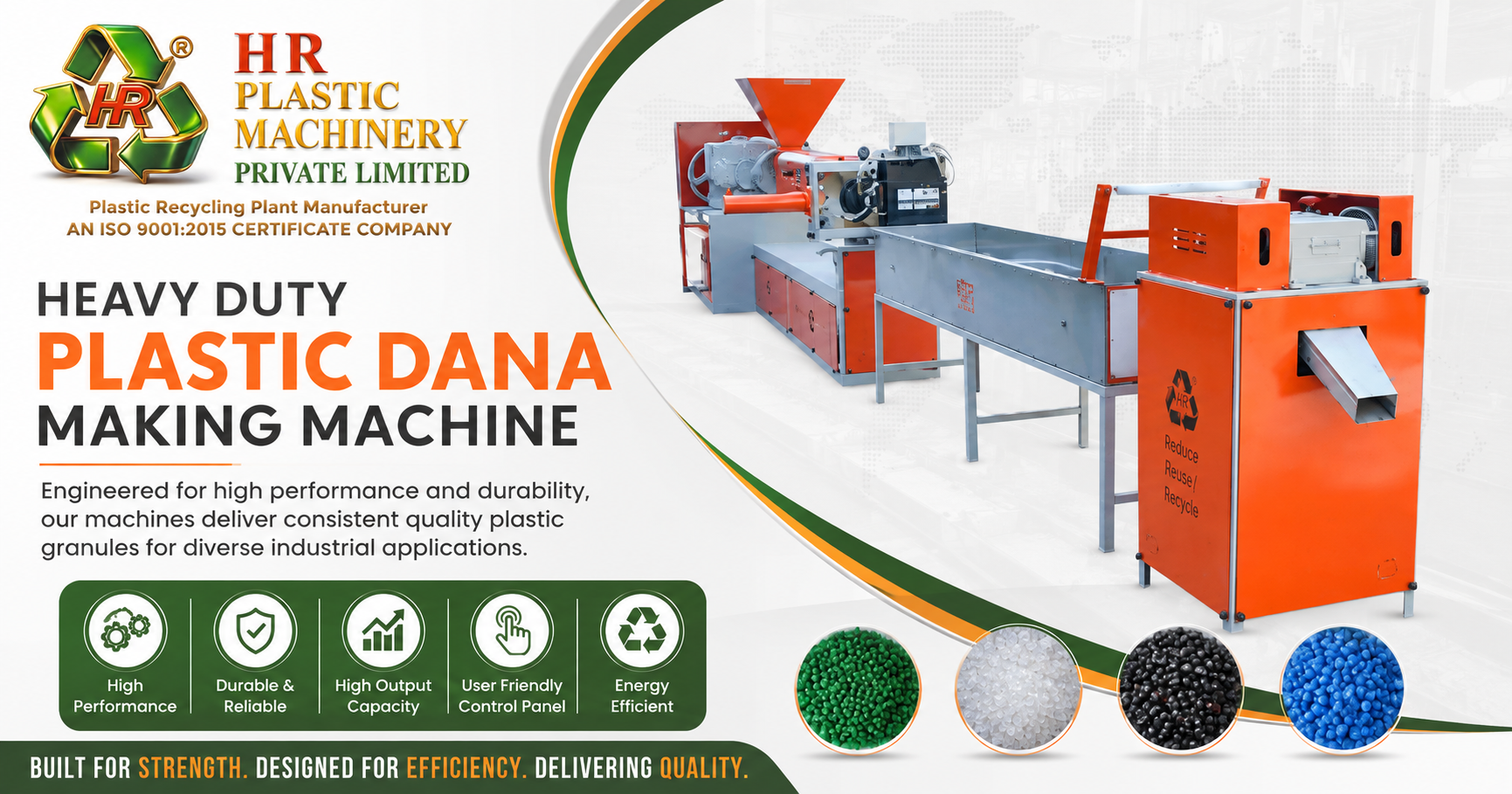
A Plastic Pelletizing Machine is a key industrial system used to convert waste plastic, scrap, or recycled materials into uniform plastic pellets or granules. These granules can be reused in manufacturing processes such as injection molding, extrusion, and blow molding.
As a trusted Plastic Pelletizing Machine Supplier, we offer single-stage, double-stage, and compounding pelletizers designed for HDPE, LDPE, PP, PET, ABS, and other thermoplastics. Our machines ensure high output, energy efficiency, and superior pellet quality, supporting industries in recycling, plastic product manufacturing, and sustainable production.
Applications:
| Industry/Segment | Application |
|---|---|
| Plastic Recycling Plants | Converting plastic scrap into reusable pellets |
| Injection Molding Units | Supplying granules for molding operations |
| Extrusion & Film Plants | Pellet production for pipe, film, and sheet extrusion |
| Packaging Industry | Reprocessing packaging waste into granules |
| Woven Sack & Raffia Plants | Regenerating PP/PE fabric scrap into pellets |
| Automotive Plastic Parts | Recycling high-grade plastics like ABS, PA |
| Cable & Wire Manufacturers | Granulating PVC and PE for insulation coating |
| Feature | Details |
|---|---|
| Machine Types | Single-stage, Twin-screw, Two-stage, Water ring, Strand pelletizer |
| Material Processed | LDPE, HDPE, PP, ABS, PET, PVC, HIPS, Nylon |
| Capacity Range | 50 kg/hr to 1000+ kg/hr |
| Cutting Method | Die-face cutting, strand cutting, hot-cut, water-ring cutting |
| Screw Design | Vent type, grooved, parallel or co-rotating twin screw |
| Motor Power | 15 HP to 200 HP |
| Heating Zone | Electric with PID temperature controller |
| Cooling System | Air cooling / water-ring / forced air |
| Automation Level | Semi-automatic to fully automatic |
| Control Panel | PLC/Touchscreen for process monitoring |
-
Converts waste plastic into valuable granules for remanufacturing.
-
Essential for industries focused on plastic recycling and sustainability.
-
Used in creating uniform, moisture-free, and impurity-free pellets.
-
Supports closed-loop manufacturing for zero-waste operations.
-
Applicable across a wide range of polymer types and product sectors.
Benefits:
-
Reduces Waste: Turns unusable scrap into reusable raw material.
-
Cost-Efficient: Minimizes need for virgin plastic, cutting production costs.
-
High Output: Machines built for continuous and large-scale operations.
-
Superior Pellet Quality: Ensures uniform shape, size, and density.
-
Customizable Solutions: Machines available for different plastics and production volumes.
-
Eco-Friendly: Supports circular economy and regulatory compliance.
-
Low Maintenance: Designed for long-term use with minimal downtime.
FAQs – Long Answers
-
What does a plastic pelletizing machine do?
A plastic pelletizing machine processes waste plastic or regrind into small, uniform pellets that can be reused in molding and extrusion applications. It involves melting, filtering, and cutting the plastic into granules. -
Which types of plastics can be pelletized?
Our machines handle a wide range including LDPE, HDPE, PP, ABS, PET, PVC, Nylon, and HIPS. Each model can be optimized for specific plastic properties and melt flow index. -
How do I choose between a single-stage and two-stage pelletizer?
-
Single-stage: Suitable for clean and consistent input materials.
-
Two-stage: Best for heavily printed, moist, or mixed materials requiring de-gassing and deep filtering for better pellet quality.
-
-
What is the output capacity of your pelletizing machines?
We supply machines ranging from 50 kg/hr for small recyclers to 1000+ kg/hr for industrial operations. The output depends on plastic type, motor power, and screw design. -
What is the typical size of pellets produced?
Pellets are usually 2–5 mm in diameter, depending on die design. The shape can be cylindrical or spherical depending on the cutting system (strand or water-ring) used. -
Is water-ring cutting better than strand cutting?
Yes, water-ring pelletizers provide automatic pellet cooling and cutting, ideal for high-speed production with better size uniformity and less dust compared to strand cutting. -
Do you offer machines with automatic control systems?
Yes. Our PLC-controlled pelletizers come with touchscreen interfaces, auto temperature regulation, motor protection, and real-time performance monitoring. -
What is the power requirement for these machines?
Varies by capacity. For example, a 200 kg/hr machine may need 40–60 HP, while a 1000 kg/hr model may require 150–200 HP. Energy-saving models are available with inverter control. -
How do you ensure pellet quality and purity?
We use high-precision filters, de-gassing zones, and high-shear screw designs. Optional metal separators and screen changers ensure impurities are removed before pelletizing. -
What is the price range of a plastic pelletizing machine in India?
Prices start from around ₹8 lakh for small units and go up to ₹60 lakh or more for fully automatic, high-capacity lines with advanced automation, filtration, and cooling systems.
Conclusion:
A Plastic Pelletizing Machine is essential for building a sustainable plastic processing cycle, enabling industries to reuse, reduce cost, and meet green manufacturing standards. As a reliable plastic pelletizing machine supplier, we offer robust, energy-efficient, and high-performance solutions tailored for various industries and plastic types.
Recent Posts